

Seerist Report · 20 May 2026
2026 FIFA World Cup
United States Edition.
11 host cities. 78 matches. 39 days of elevated risk.
June 11 – July 19, 2026.
The tournament
First three-host World Cup.
Largest field in history.
The United States, Canada, and Mexico will co-host the 2026 FIFA World Cup from 11 June to 19 July. The United States will stage the majority of games: 78 matches across 11 host cities, compared with 13 each in Canada and Mexico. Dallas alone will host 9 matches, more than any other city.
The tournament will attract millions of visitors and substantial commercial activity. Its scale and international profile will amplify a range of operational and security risks: geopolitical tensions, complex cross-border coordination, and elevated protest activity across all three host nations.
-
0
-
0
-
0
-
0
Risk profile
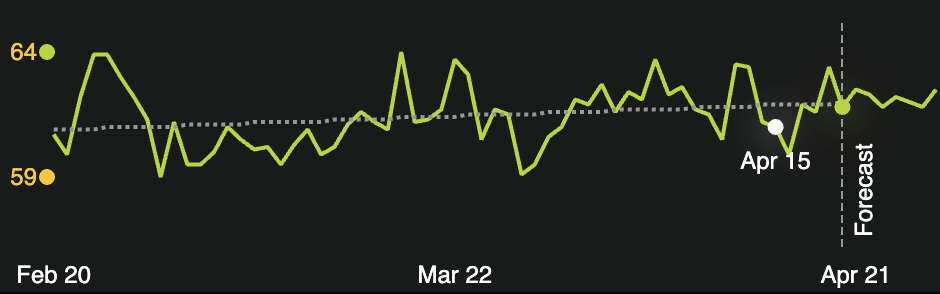
United States Risk Ratings and Pulse
The US presents a low overall security baseline with elevated exposure in two dimensions: civil unrest is rated medium, driven by immigration enforcement tensions and anti-administration mobilisation, while all cyber risk categories are rated high, a consistent pattern for critical infrastructure environments hosting major international events.
Risk ratings
Security
- Security Low
- Civil Unrest Medium
- Crime Low
- Kidnap Low
- Terrorism Low
- War Very Low
Operational
- Operational Medium
- Infrastructure Low
- Institutional Medium
- Labour Medium
Cyber
- Cyber High
- Cyber Extortion High
- Data Leak / DDoS High
- Disruptive Attack High
- Espionage High
- Financial Fraud High
The risk landscape
Drivers of unrest in 2026.
In 2026, the United States faces a complex landscape of instability driven by electoral friction, aggressive federal policies, and economic strain. The November mid-term elections serve as a primary catalyst for unrest, as analysts warned in January 2026 that deep-seated mistrust over electoral integrity and the administration's efforts to nationalise ballot oversight will likely trigger protests and security threats, including bomb hoaxes.
Social stability is further pressured by federal immigration enforcement: May 2026 assessments indicate that deportations and potential travel bans targeting World Cup participants could drive significant domestic unrest and international backlash. Economically, persistent inflation fuelled by Middle East energy disruptions and a Federal Reserve leadership transition in May 2026 are undermining public confidence.
Analysts further assess that the rise of individual terrorism and radicalisation, alongside sustained pro-Palestinian and anti-war activism, will continue to challenge law enforcement and deepen political polarisation throughout the year. Most protests still occur near government buildings such as state capitols and city halls, but major events like the FIFA World Cup may shift demonstrations toward stadiums and other high-visibility sites.
-
Mid-term elections
November ballot fights, bomb hoaxes, and election-integrity protests.
-
Anti-administration
'No Kings' protests against President Trump.
-
ICE enforcement
Anti-ICE mobilisation following the killing of Alex Pretti in Minneapolis.
-
US in Venezuela
Protests in response to the capture of President Maduro.
-
US in Iran
Protests against US military action in Iran.
In focus · Immigration
Six months. 3,600+ verified unrest events.
-
0
-
0
-
0
Tensions surrounding federal immigration enforcement are likely to drive increasingly violent demonstrations over the coming year, particularly as state officials pursue legal challenges that the Trump administration views as constraints on executive authority. Reports on 15 January indicated the Pentagon placed 1,500 active-duty soldiers on standby for deployment to Minnesota following Trump's threat to invoke the Insurrection Act if state officials failed to prevent attacks on ICE personnel.
Although these legal limits enable a reduction in the severity of confrontations between protesters and law enforcement, the Trump administration is likely to see them as undermining officers' safety and their capacity to enforce federal immigration laws.
Businesses surrounding ICE facilities or government buildings are likely to face elevated exposure to incidental security threats, while those associated with ICE personnel or operations may face elevated threats of targeted unrest.
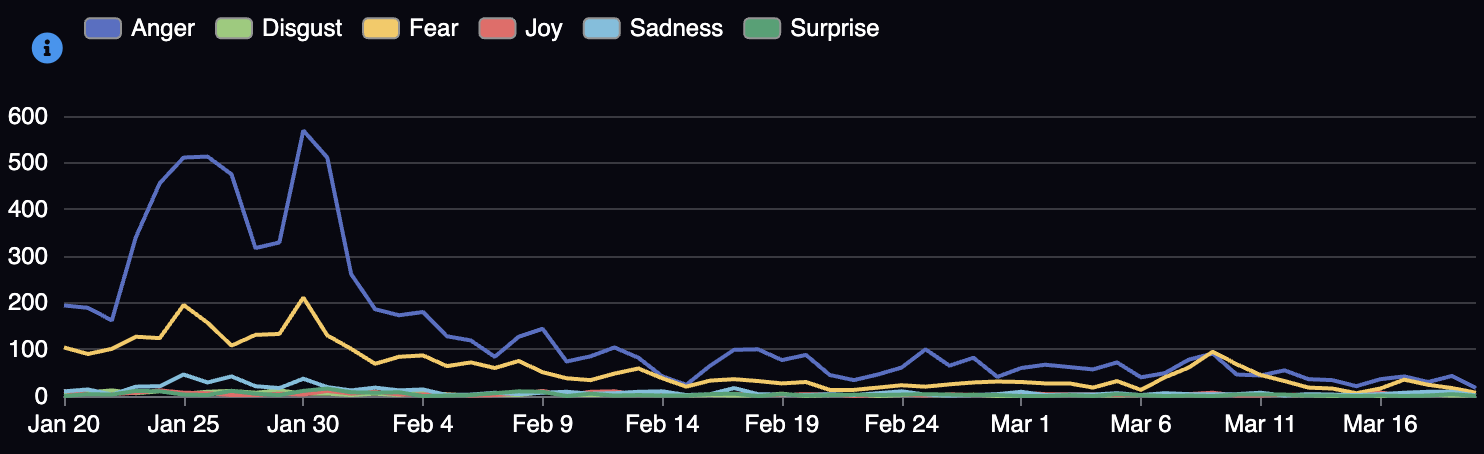
EmotionsAI · 60-day signal
7,978 news and social media reports. Anger dominates the narrative.
-
41.3%
-
23.8%
-
4.6%
24 Jan: spike in 'anger' emotion after the killing of Alex Pretti in Minneapolis, which then transformed into national mobilisations against ICE.
Host venues
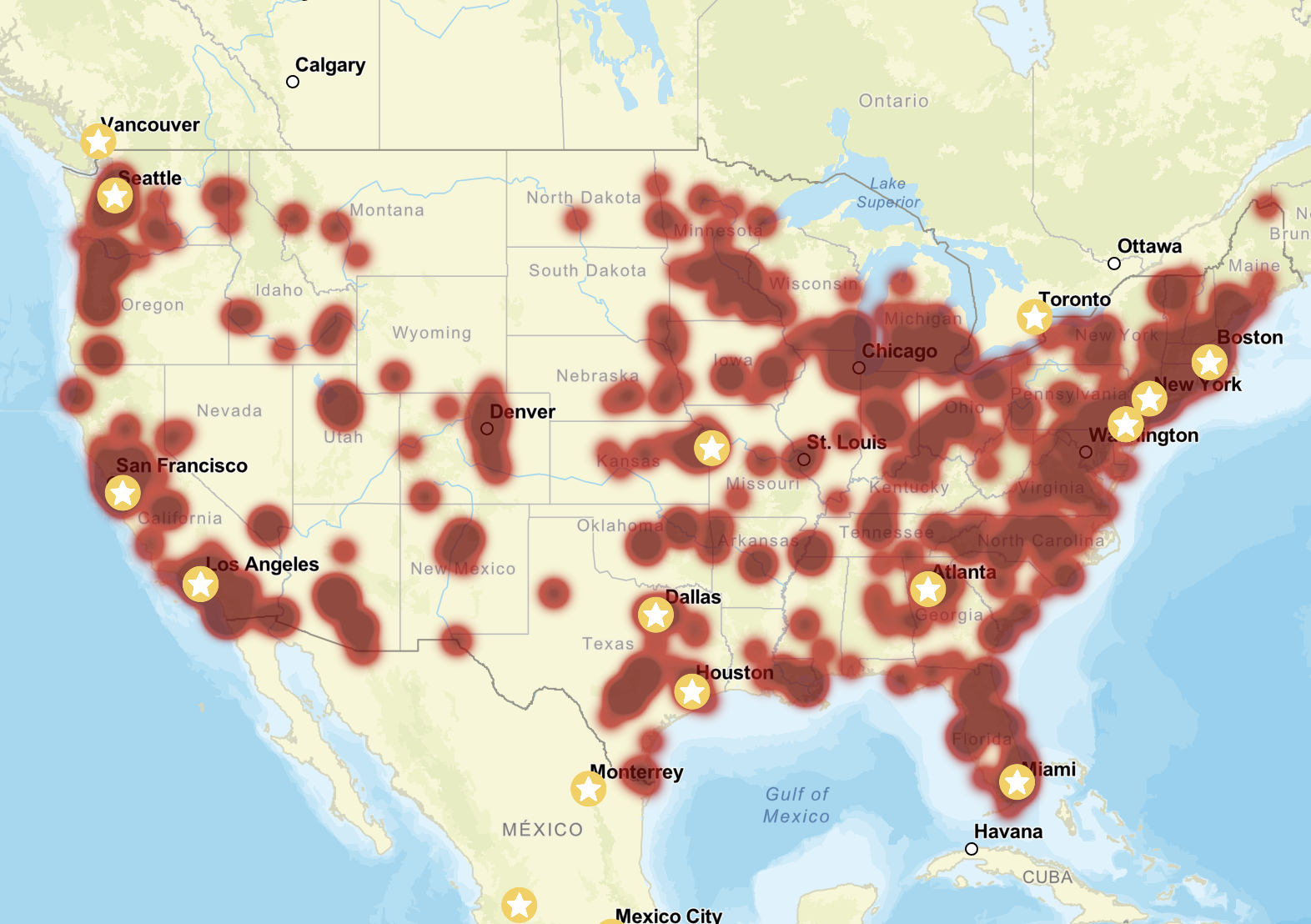
Eleven cities. Eleven different threat surfaces.
Each US host city has its own crime, unrest, and political dynamics. The dots below light up in tournament-schedule order: LA opens, MetLife hosts the final. Tap any dot to jump to its deep-dive section, or press play on the calendar below the map to watch the 39-day tournament cycle through, city by city.
Thursday, June 11, 2026
Venue overview
New York / New Jersey
- MetLife Stadium
- JFK · LGA · EWR
- Mixed, protest-sensitive
| Loading… |
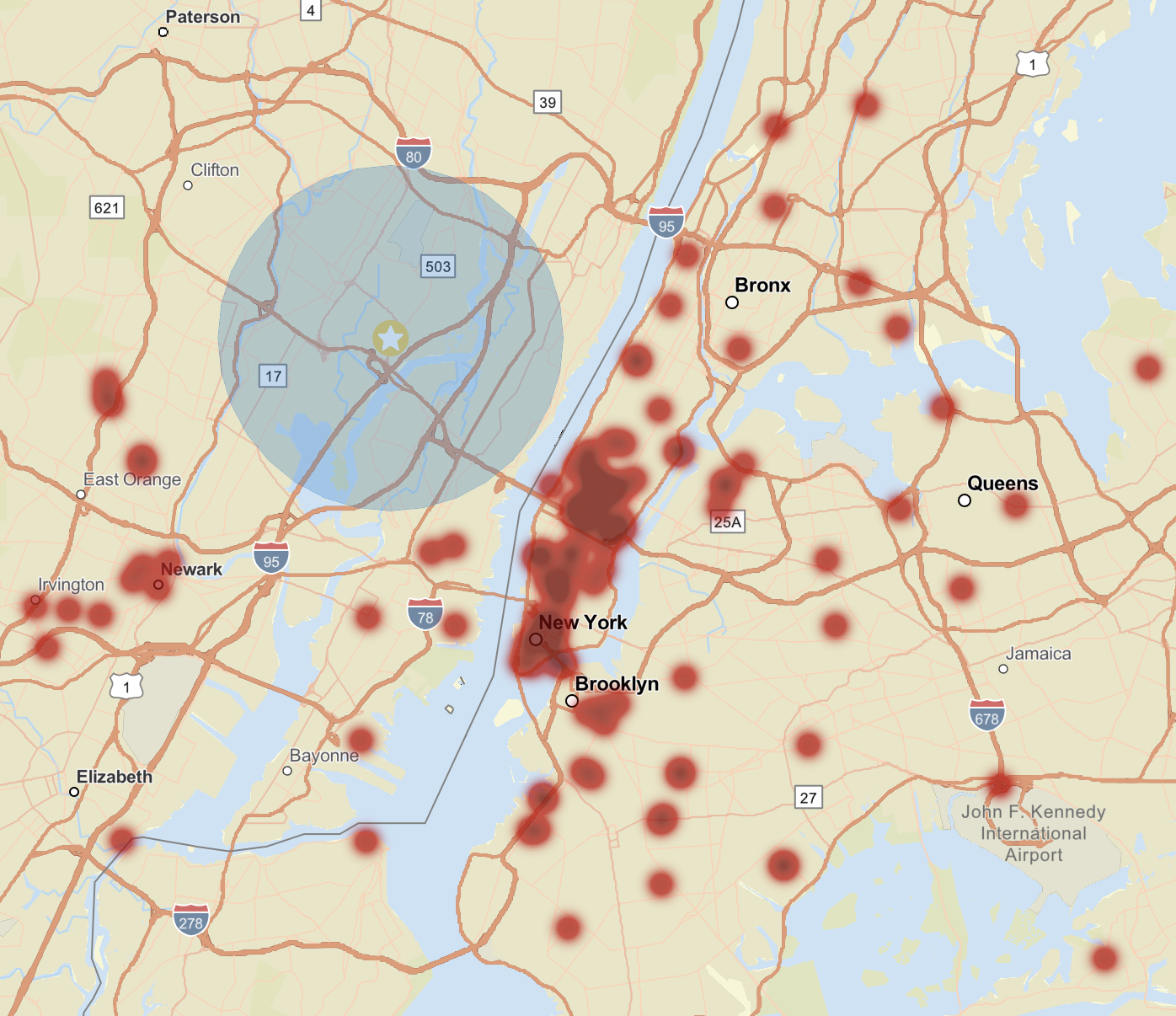
- Jan 11 Evening shooting on Elizabeth Avenue in Elizabeth, NJ; at least three wounded.
- Mar 7 Undetonated homemade bombs lit by attackers at an anti-Islam protest outside the Mayor's residence on East End Avenue, Manhattan; arrests made.
- Apr 13 Activists blocked traffic outside Senator Schumer's Manhattan office over US bomb sales to Israel; about 100 arrested.
87.9% of recorded events classified as unrest.
From November 2025 to April 2026, Seerist recorded verified unrest, crime and terrorism events across New York City. Of these, 87.9% were classified as unrest, 11.6% as crime, and one event as terrorism. Several spikes in event activity were observed in the past six months, typically corresponding to civil society responses to international developments and most often manifested through protest activity.
The threat outlook for MetLife Stadium (temporarily renamed New York New Jersey Stadium for the tournament) is characterised by elevated terrorism risks, significant operational disruptions, and environmental hazards. March 2026 analyst assessments warn that the stadium faces increased exposure to Islamist terrorism driven by US involvement in the Iran conflict and geopolitical grievances linked to the Israel-Hamas war.
Activist groups are also expected to target the venue to protest immigration policies and the perceived 'private luxury' of the event caused by record-high ticket prices. Additionally, May 2026 reports identify the venue as high-risk for extreme heat, particularly for the 19 July final. Operationally, fans face access challenges due to a total ban on stadium parking, alongside exorbitant transit costs and planned closures at New York Penn Station.
Crime rates in New York City vary considerably by neighborhood. Areas such as East New York, parts of the Bronx, and some sections of Harlem report relatively higher crime rates. Petty crime, including pickpocketing and scams, is more common in crowded tourist destinations such as Times Square and Midtown Manhattan, as well as on public transit.
New York City is regularly assessed as a prominent potential target for terrorist activity in the United States, largely due to its global cultural, economic, and symbolic significance. The Department of Homeland Security and the NYPD maintain a high level of vigilance, with particular attention to areas that attract large crowds or hold symbolic value. Potential targets include major landmarks such as Times Square, One World Trade Center, the Statue of Liberty, the Empire State Building, and the United Nations headquarters. These assessments are based on historical precedent and current security practices, not on specific threats.
In depth · New York / New Jersey
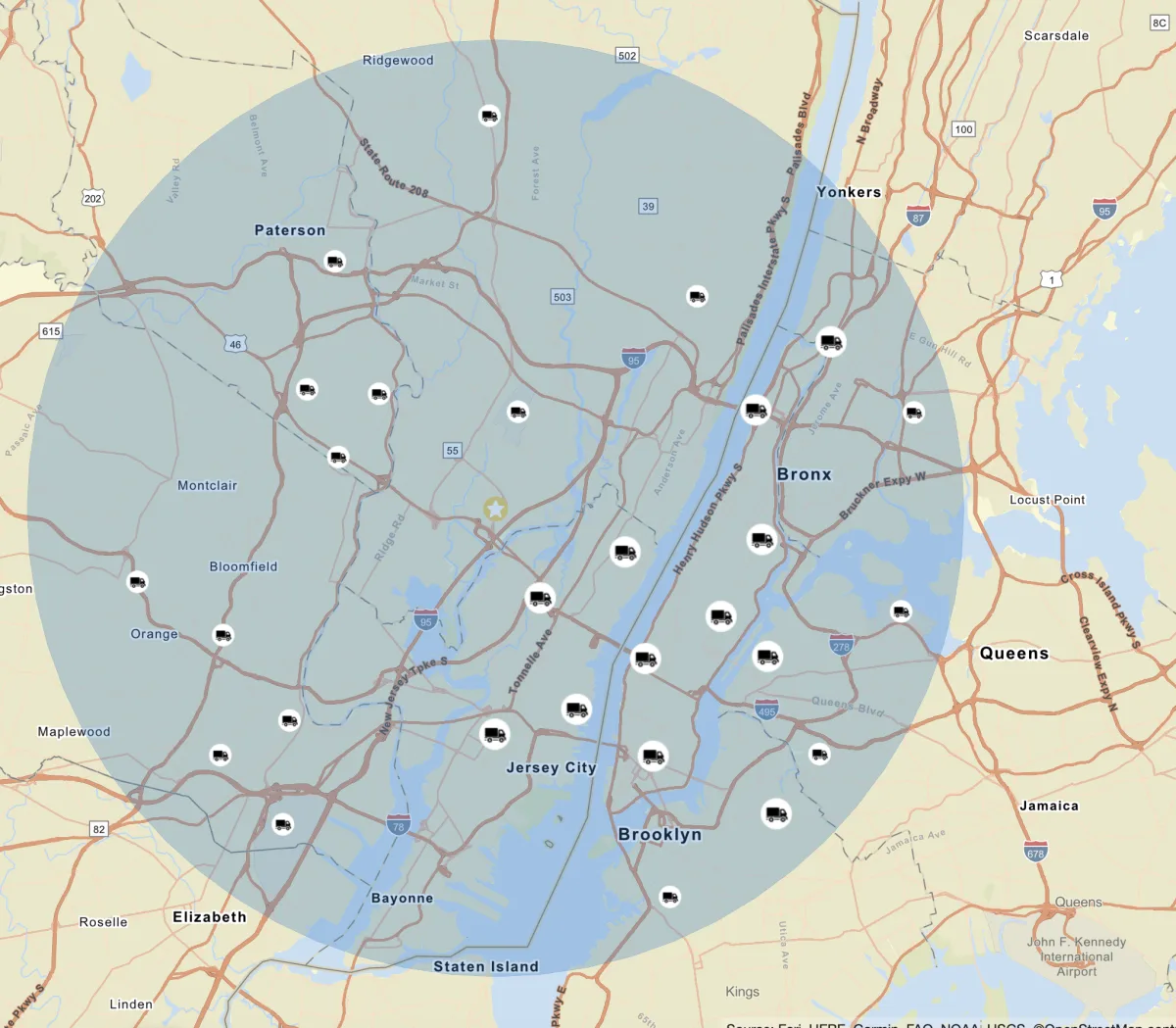
Transportation challenges for MetLife Stadium.
Getting to MetLife Stadium for the 2026 World Cup presents significant financial and logistical challenges for spectators. According to April 2026 news reports, round-trip train fares from New York's Penn Station will surge nearly 12-fold to $150, while bus tickets will cost $80. Logistically, fans face a total ban on general on-site parking, with limited available spots reportedly costing over $200. Capacity is also strictly limited; only 40,000 rail tickets will be sold per match, and Penn Station will implement four-hour access restrictions for non-ticket holders before games to manage the anticipated 78,000 daily visitors. These measures have drawn significant public outrage and political criticism, with New York Governor Kathy Hochul describing the costs as "awfully high" in April 2026.
Surging transit costs & capacity constraints
Transportation officials confirmed that round-trip train fares from Manhattan's Penn Station to MetLife Stadium will surge to $150 for World Cup matches. This represents a nearly 12-fold increase from the standard $12.90 fare for the nine-mile journey. Bus tickets to the stadium are also set at an elevated rate of $80, according to April 2026 news reporting. Officials defended the pricing by stating that the decision was made to pass costs to fans rather than local taxpayers, noting that the transit agency faces a $48 million tab for security and extra services while receiving no transportation funding from FIFA.
NJ Transit plans to move approximately 40,000 fans via rail for each of the eight matches, but only 40,000 train tickets will be available per matchday, according to April 2026 reports. To manage these volumes, transit officials indicated that portions of Penn Station will be restricted exclusively to World Cup ticket-holders for four hours prior to kickoff. These measures aim to handle the significant crowds expected for the event, including the final on July 19, 2026.
Parking restrictions and high fees
General on-site parking will be unavailable for most fans during the tournament, as announced by officials in March 2026. For the limited parking spots that may be available, fans were warned to expect significant costs, with some reports indicating prices exceeding $200 per match. Consequently, host committees are advising the 78,000 daily spectators to avoid driving and instead utilize mass transit or dedicated walkways from off-site lots.
Venue overview
Boston
- Gillette Stadium
- BOS
- Generally favorable
| Loading… |
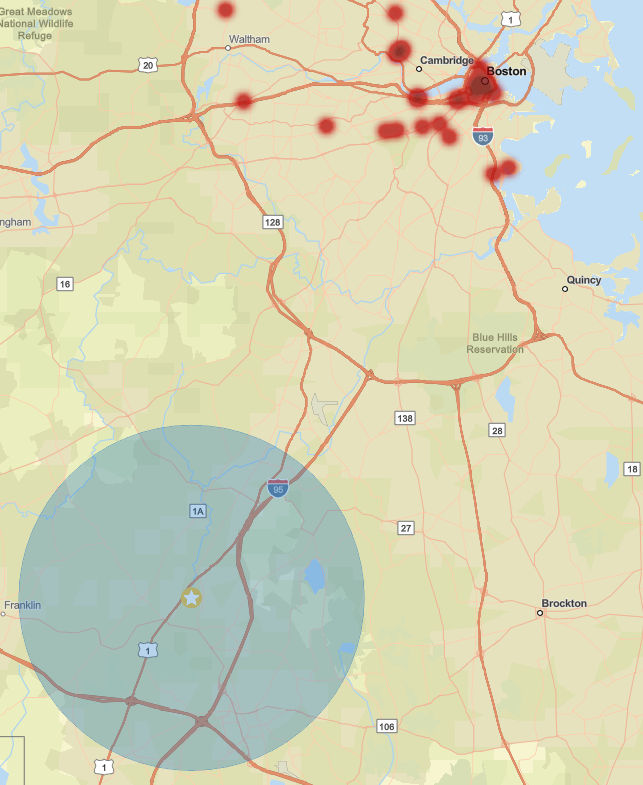
- Apr 2 Students protested possible ICE presence at Northeastern University.
- Apr 8 Protest on Boston Common against Israeli and American military action in Iran.
- Mar 17 Demonstrators protested Israeli and American military action in Iran at the Savin Hill bridge.
- Feb 17 Climate activists outside TD Garden demanded the Celtics drop oil and gas sponsorship.
16th-safest among the 50 largest US cities.
Between November 2025 and April 2026, the frequency of verified unrest events in Boston and the surrounding area peaked on January 10 and from January 20 to February 4. These peaks coincided with protests related to nationwide ICE raids and the US military operation in Venezuela involving the capture of former President Nicolás Maduro.
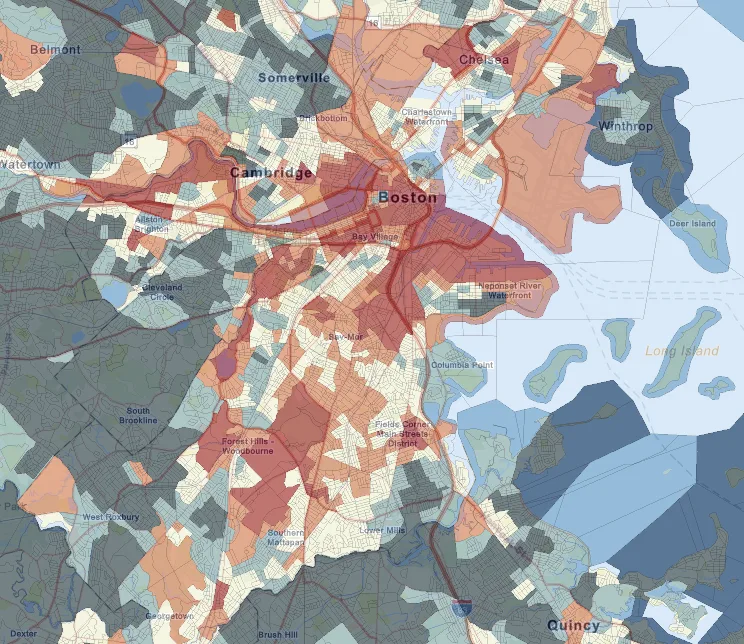
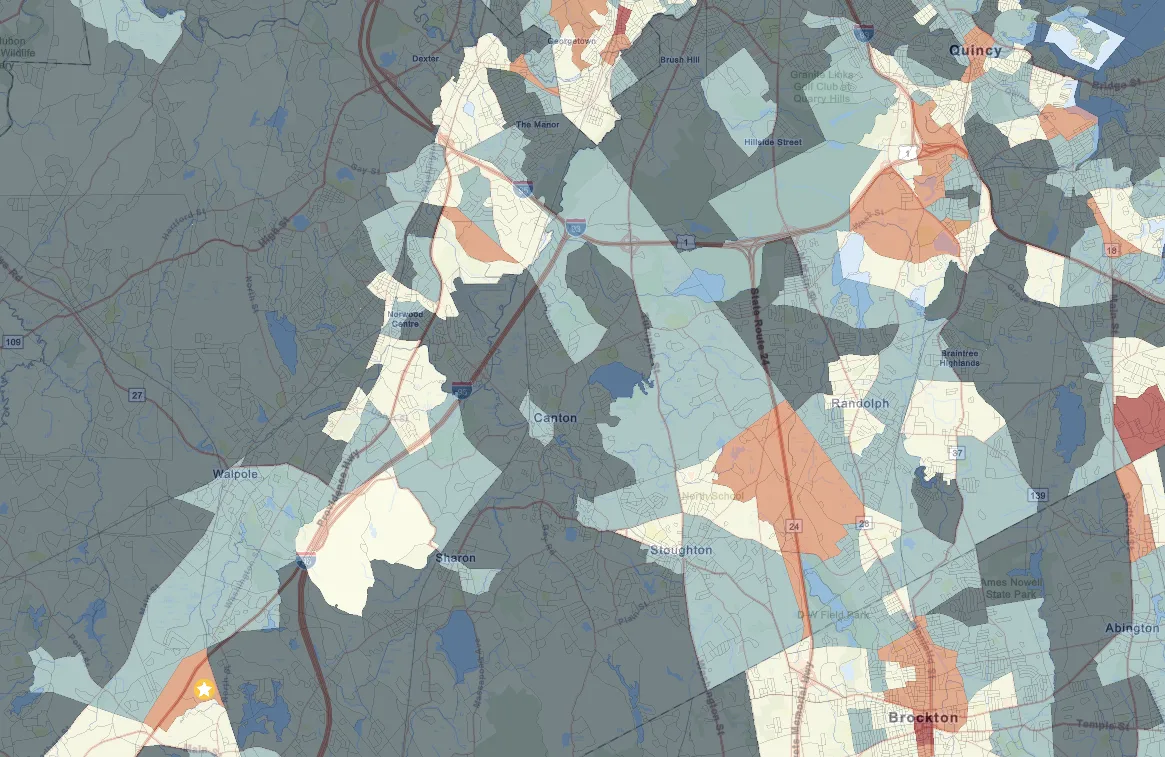
Boston is assessed to have a generally favorable security environment, with crime rates lower than most other large US cities. According to FBI data for 2023, Boston ranked as the 16th-safest among the 50 largest US cities for overall violent crime rates.
Neighborhoods in southern Boston, including Dorchester, Mattapan, and Roxbury, as well as East Boston, report relatively higher crime rates. Unrest events are most frequently recorded in the Downtown area and near universities in the Greater Boston region.
 Gillette Stadium
Venue overview
Los Angeles
- SoFi Stadium
- LAX
- Elevated, protest-sensitive
| Loading… |
- Apr 11 Anti-ICE protest at the Edward R. Roybal Federal Building; several arrested.
- Jan 11 Shooting at a fast-food restaurant on W Manchester Avenue; one killed, four wounded.
- Dec 18 Tourism workers protested the delay of a $30/hr minimum wage at LAX.
A general strike threatens the tournament.
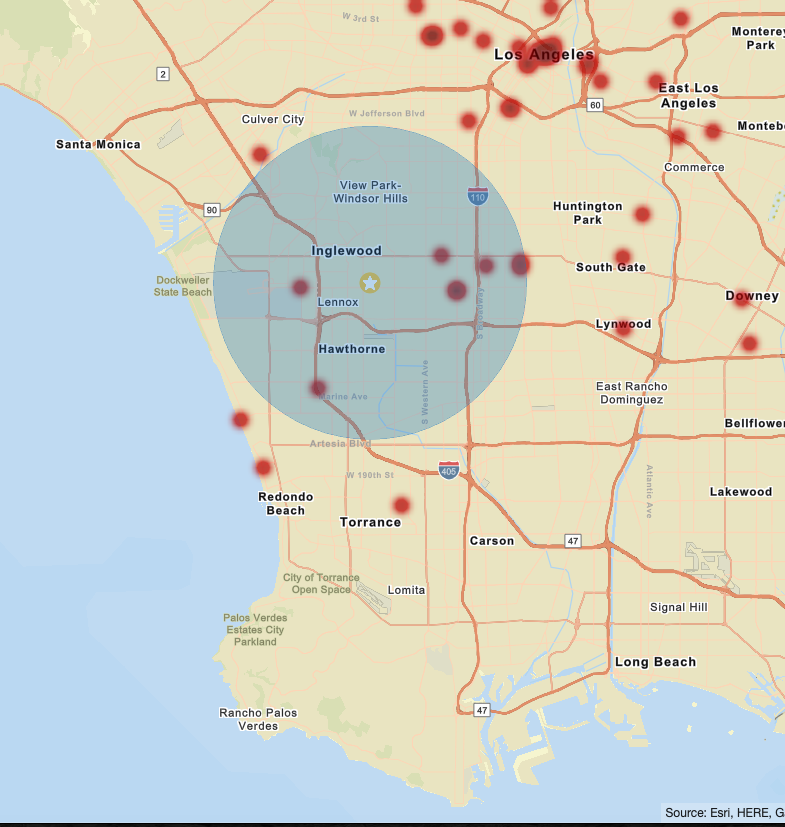
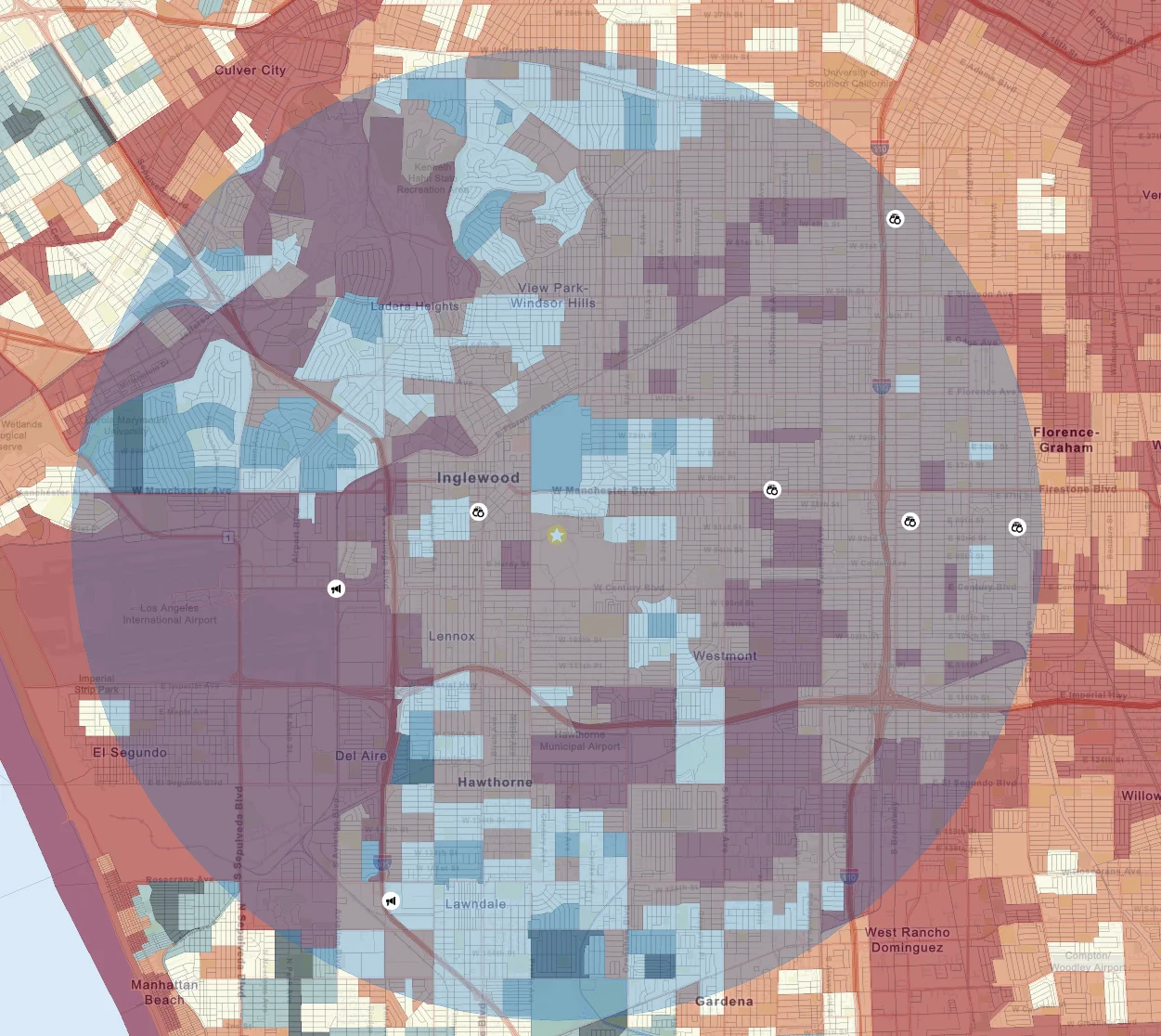
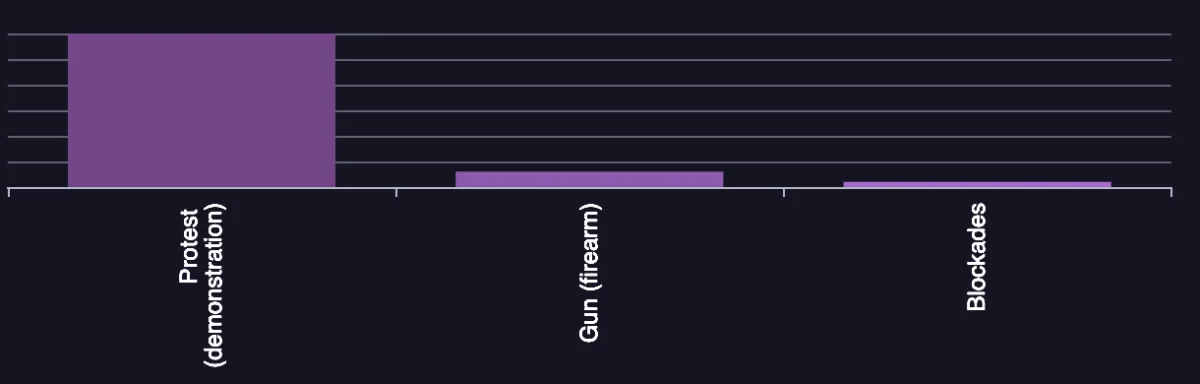
Between November 2025 and April 2026, of the verified unrest and crime events recorded in Los Angeles, 85.5% were unrest; within that subset, 75.3% were protests and 1.1% involved blockades. Event frequency peaked on December 18 and from January 8 to March 2, periods corresponding with protests related to nationwide ICE raids and the start of the US-Israel-Iran conflict.
In April 2026, nearly 2,000 employees at SoFi Stadium threatened a general strike if ICE operates in the city during the World Cup. The union Unite Here Local 11 filed a complaint against FIFA, alleging a climate of fear and intimidation among workers who are afraid to report for duty if ICE is present. These labor disputes, coupled with demands for collective bargaining and affordable housing, threaten to disrupt preparations and operations for the tournament.
Los Angeles has experienced a sharp increase in protest activity since early 2025, primarily driven by opposition to the Trump administration's core policy priorities. In June 2025, anti-ICE and mass deportation protests lasted for five consecutive days, leading to a curfew in downtown LA. During these events, approximately 23 businesses were looted and nearly 200 people were arrested.
The largest Iranian diaspora outside of Iran is based in Los Angeles, in an area known as 'Teherangeles', located in Westwood. A large presence of Iranian nationals during matches is expected, given Iran is scheduled to play two of their FIFA World Cup matches in Los Angeles on 15 June and 21 June, which may present opportunities for unrest.
Protests frequently concentrate around the Metropolitan Detention Center (MDC), downtown LA, and the Fashion District. Security forces have responded to these gatherings with kettling, blockades, and crowd-control munitions, increasing the risk of incidental exposure to violence for bystanders and staff. While direct targeting of companies remains rare, those perceived to have ties to the administration face an elevated threat, as evidenced by vandalism at Tesla showrooms.
Analysts assess that these social tensions, combined with a lack of comprehensive human-rights protections in the city's hosting plans, create a high-risk environment for operational disruption. Businesses and visitors should expect frequent, rapidly organised demonstrations near downtown and official venues, with security responses likely to include road closures and strict access controls that will impact mobility throughout the June–July tournament period.
Los Angeles is assessed to have a generally low security risk level, though its overall crime rate is above state and national averages. Crime rates vary significantly by neighbourhood; petty crimes including pickpocketing, vehicle break-ins, and bag snatching are more frequently reported in high-traffic tourist areas such as Hollywood, Venice Beach, and downtown LA. The LAPD maintains a visible presence in these areas and near major attractions.
 SoFi Stadium
In depth · Los Angeles
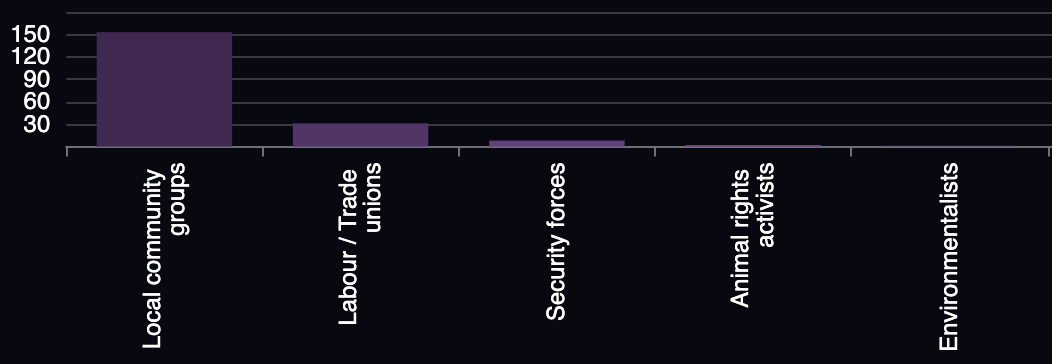
Who is protesting? Local community groups dominate.
Over the past 12 months, local community groups have accounted for the overwhelming majority of recorded protest perpetrators in Los Angeles, far outpacing labour and trade unions and security forces. This reflects a grassroots mobilisation pattern rather than institutionally organised unrest, which tends to be harder to predict and more volatile in escalation.
Key factors
The SoFi Stadium worker dispute is the most operationally significant near-term threat. Unite Here Local 11 has filed a complaint against FIFA and threatened a general strike if ICE operates in the city during the World Cup, a direct collision between federal enforcement posture and the tournament's labour dependency.
The large Iranian diaspora in Westwood ('Teherangeles') adds an additional variable: Iran is scheduled to play in Los Angeles on 15 June and 21 June. The community is politically activated around the Iran conflict and may produce large spontaneous gatherings independent of the match-day schedule.
Venue overview
San Francisco
- Levi's Stadium
- SFO
- Generally low
| Loading… |
88.0% of events classified as unrest.
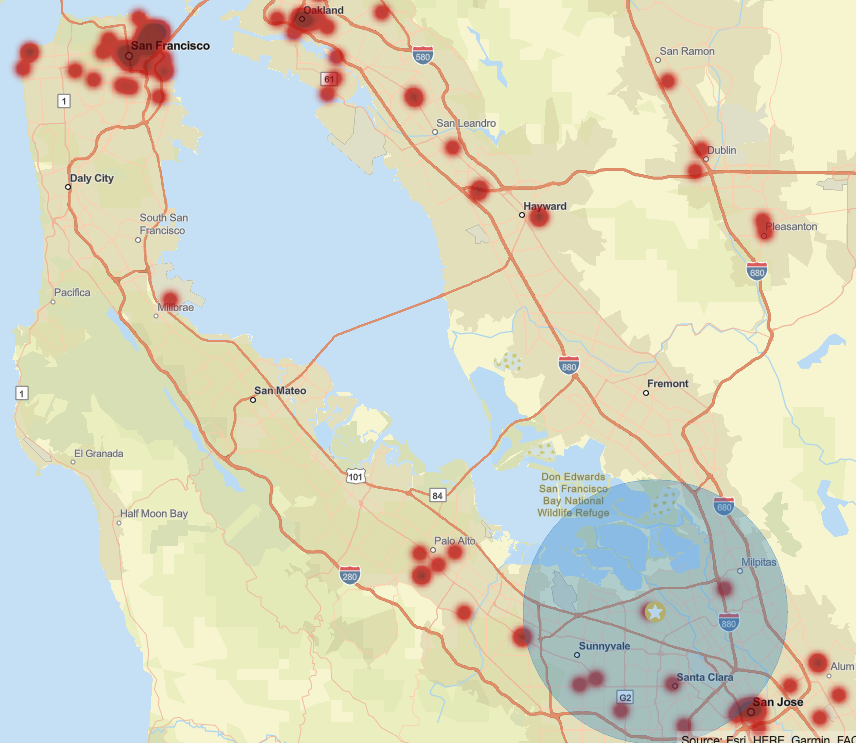
Between November 2025 and April 2026, verified unrest and crime events recorded in the San Francisco Bay Area were classified as 88.0% unrest and 12.0% crime.
Event frequency peaked on January 10 and 28, and February 4 and 28, with seven and six unrest events logged respectively. These periods corresponded with protests related to ICE raids, general anti-government movements, and the start of the Iran conflict.
The San Francisco Bay Area is assessed to have a generally low security risk level, though its overall crime rate is above state and national averages. Crime rates vary significantly by neighborhood, with more serious violent crimes tending to occur in areas less frequented by tourists, typically outside downtown locations.
- Feb 26 Unionized passenger-service workers rallied for a new contract at SFO.
- Jan 10 Protest at a Tesla dealership in Sunnyvale over the ICE killing of a woman in Minneapolis.
- Apr 12 Second incendiary attack in 72 hours at the OpenAI CEO's residence on Lombard Street; two arrested.
- Apr 10 Incendiary device thrown at the OpenAI CEO's residence on N Chestnut Street, with threats at OpenAI HQ; arrest made.
Venue overview
Houston
- NRG Stadium
- IAH · HOU
- Generally low
| Loading… |
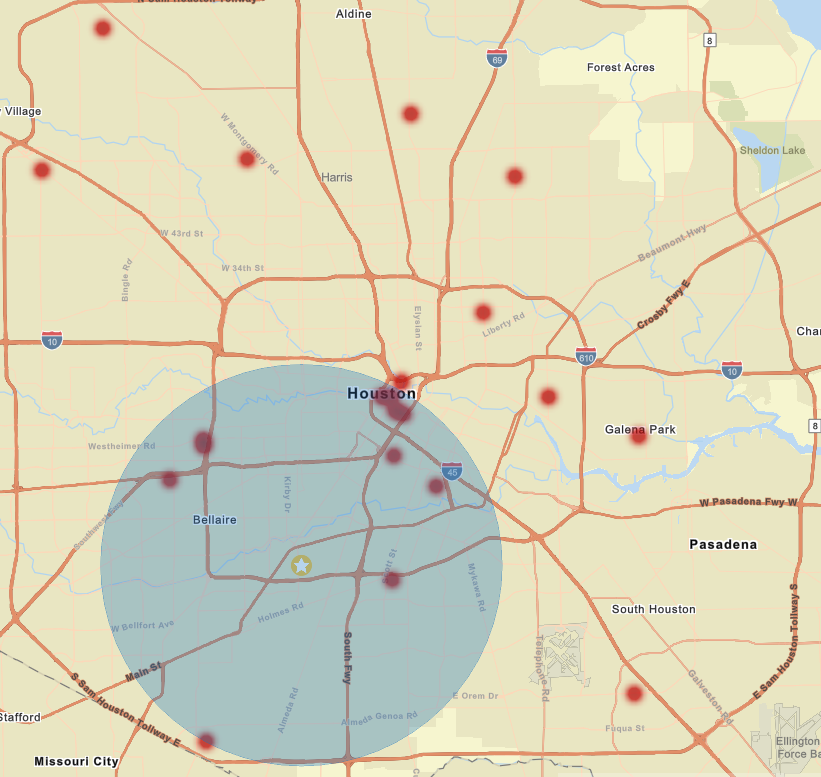
- Jan 4 – 27 Protests surrounding ICE operations and the capture of Venezuela's Maduro.
53.6% unrest, 46.4% crime: a tighter split.
Between November 2025 and April 2026, of the crime and unrest events recorded in Houston, 53.6% were classified as unrest and 46.4% as crime. Event frequency peaked between January 4 and 27, with two and eight cumulative unrest events logged respectively. These periods coincided with protests related to ICE raids and subsequent unrest following developments in Venezuela.
Travelers to Houston face a complex security environment characterised by political unrest, aggressive immigration enforcement, and persistent gun violence. March 2026 analyst assessments indicate that activist groups are likely to target host cities like Houston to amplify grievances against the administration's policies, potentially disrupting stadiums and fan zones.
Security operations are complicated by a political rift between city and state officials: April 2026 news reporting noted that Houston was forced to repeal local limits on ICE cooperation to secure $114 million in state public-safety funding, a move rights groups warn may create friction with the city's large immigrant communities. Logistically, visitors should expect significant mobility disruptions due to ongoing infrastructure projects and a projected influx of 500,000 people, with May 2026 reports advising businesses to implement flexible commuting plans to manage extreme congestion.
Houston is assessed to have a generally low security risk level, although its overall crime rate is above state and national averages. Crime rates vary significantly by neighborhood. Petty crimes such as pickpocketing, vehicle break-ins, and bag theft are more commonly reported in high-traffic areas such as Downtown, the Galleria, and the Museum District. These locations are regularly patrolled by law enforcement, but the high volume of visitors may increase the risk of opportunistic crime. More serious violent crimes typically occur in neighborhoods less frequented by tourists.
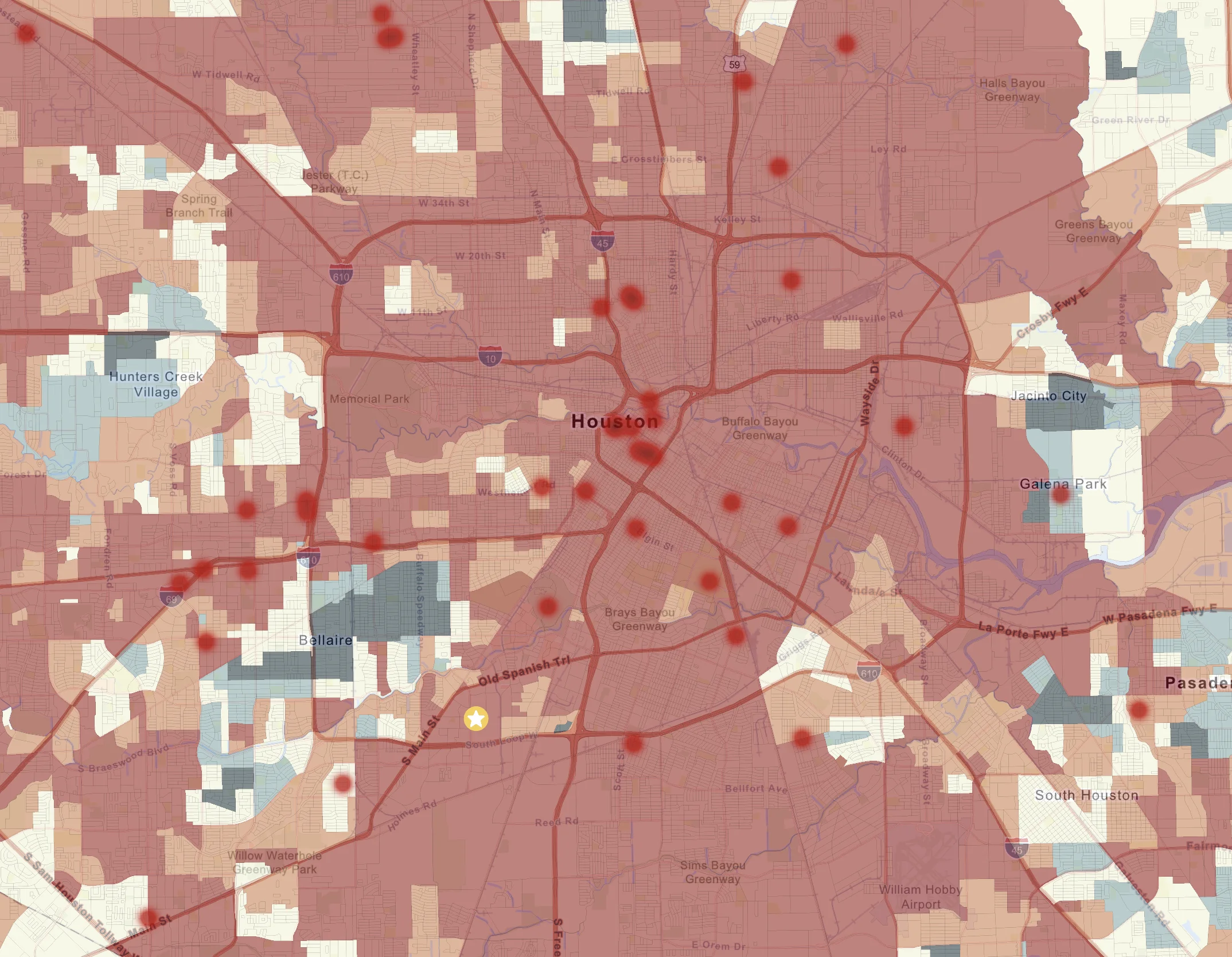 NRG Stadium
Venue overview
Dallas / Fort Worth
- AT&T Stadium · Arlington
- DFW
- Generally low, mixed crime rates
| Loading… |
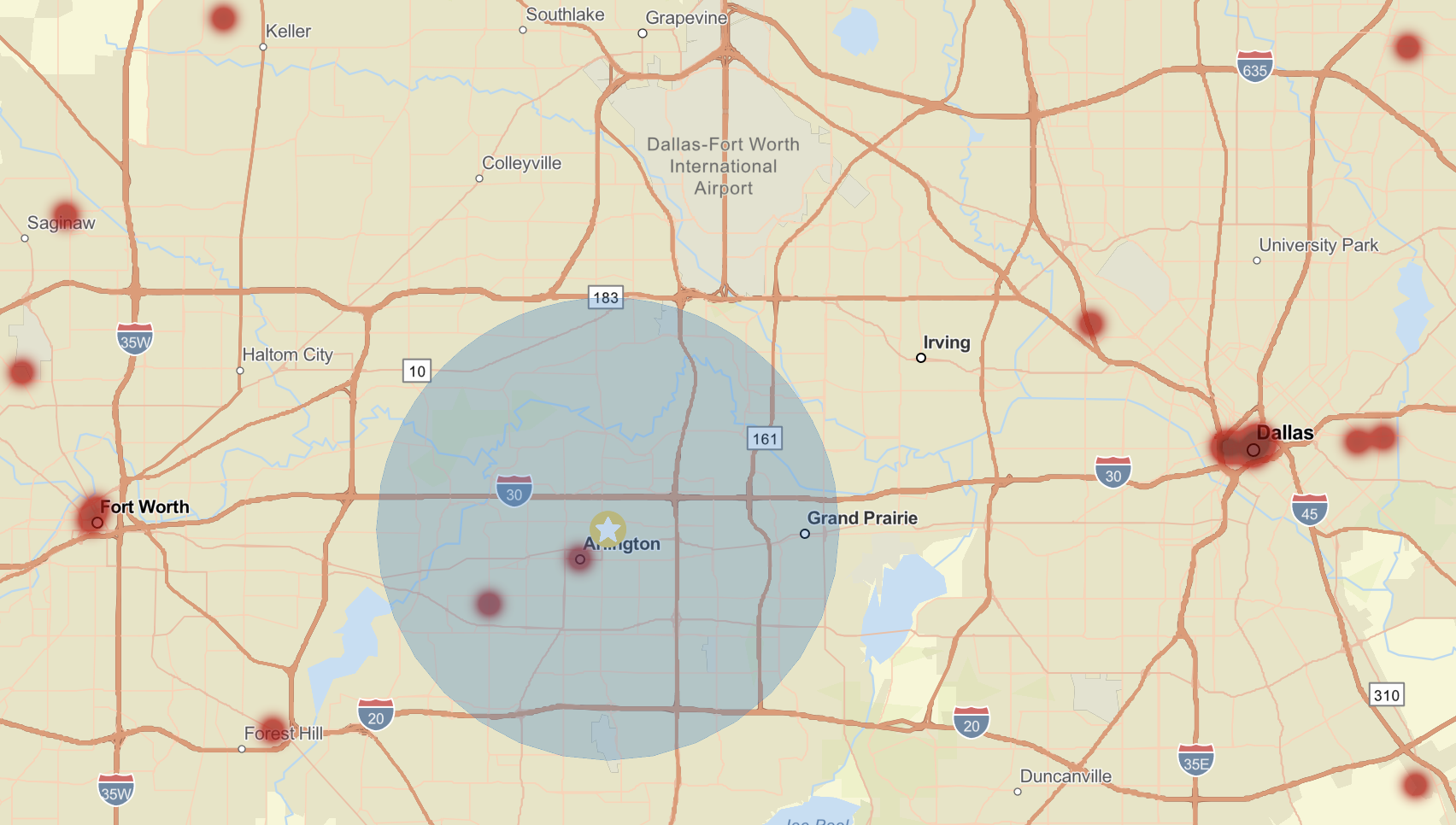
- Mar 1 Protest at the Grassy Knoll, Dallas, against Israeli and American military action in Iran.
- Feb 23 Protest at Pantego Town Hall against the closure of a performing-arts dance studio.
- Feb 25 Activists protested ICE-related arrests at the Fort Worth federal courthouse.
- Jan 20 'Free America Walkout' protest at Arlington City Hall against the administration.
9 matches. The most of any host city.
Between November 2025 and April 2026, Seerist recorded verified unrest and crime events in the Dallas-Fort Worth Metroplex, with 65.6% categorized as unrest and 34.4% as crime. The most frequently recorded events were protests (21), shootings (11), and a robbery.
The Dallas-Fort Worth area is assessed to have a generally low security risk level. However, crime rates vary: Fort Worth and Dallas report rates above state and national averages, while Arlington's crime rate is below the national average. Crime rates in all three cities vary significantly by neighborhood; more serious violent crimes tend to be concentrated in areas less frequented by tourists.
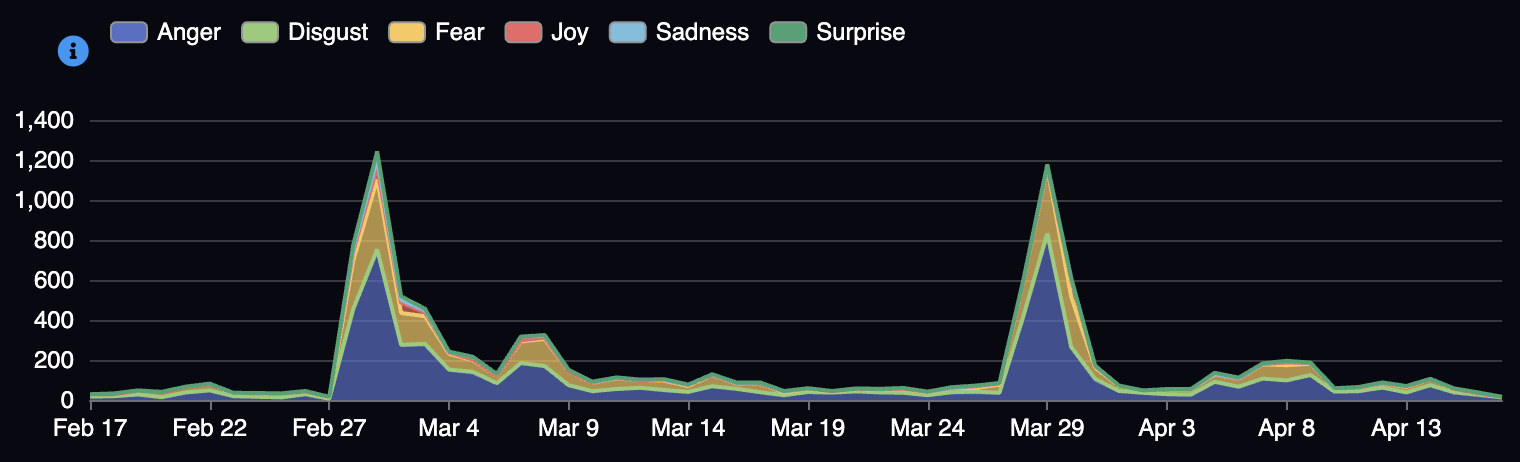
Following the launch of US and Israeli strikes on Iran on 28 February 2026, major Texas cities experienced significant unrest. In Austin, a gunman opened fire at a bar on 1 March 2026, killing two and injuring 14; the FBI investigated the attack as a potential act of terrorism motivated by retaliation for the strikes.
The 'No Kings' movement organized multiple rounds of large-scale demonstrations across Texas to oppose the Trump administration's policies. By March 2026, the movement reached its third round of action, with thousands of demonstrators pouring into the streets of Dallas, Fort Worth, Frisco, and Arlington on 28 March.
Large public gatherings in Texas cities were marred by sudden outbreaks of violence. In February 2026, a shooting occurred in northeast Houston during a large trail-ride gathering of hundreds of people. The incident, which took place as officers were attempting to disperse the crowd, resulted in six people being shot, including two who were left in critical condition.
Violent incidents have frequently intersected with the broader anti-administration movement: notably the March 2026 mass shooting at an Austin bar linked to anti-war sentiment, and a September 2025 attack on a Dallas ICE facility. State infrastructure has also been targeted, evidenced by the June 2025 evacuation of the Texas State Capitol due to threats against lawmakers.
While many demonstrations remained peaceful, the presence of counter-protesters and heavy law-enforcement deployments, including the National Guard, has sustained a medium risk of localised violence and significant operational disruption across the state's urban centres throughout the tournament window.
In depth · Texas
Venue overview
Miami
- Hard Rock Stadium
- MIA · OPF
- Mixed, Cuba-driven volatility
| Loading… |
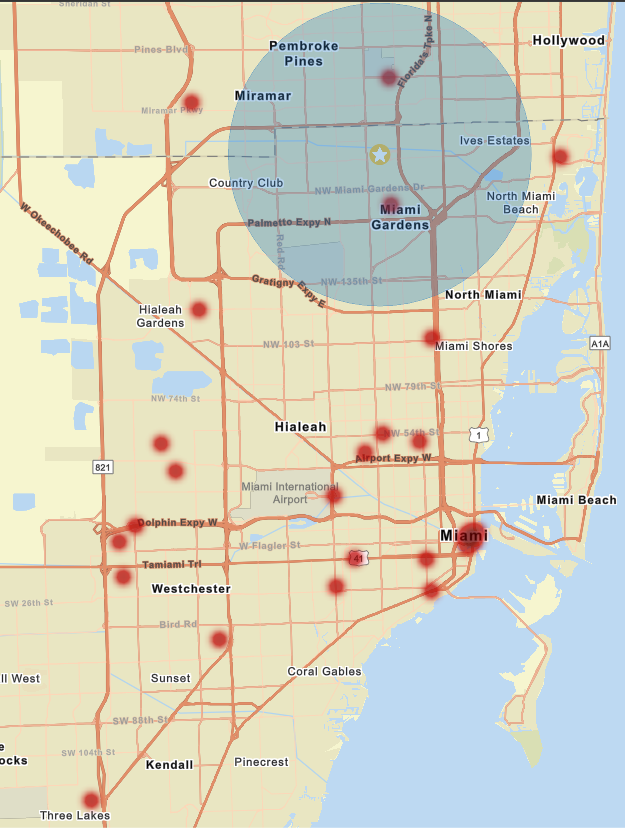
- Apr 11 Evening street shooting on NW 183rd Street, Miami Gardens; three wounded.
- Jan 6 Gas-station shooting in Miramar; one killed, two wounded.
- Mar 1 Activists at Miami International Airport demanded an end to the US economic blockade of Cuba.
- Mar 23 'Free Cuba' rally at Milander Park, Hialeah, calling for political change in Cuba.
Instability in Havana is a domestic security concern for Miami.
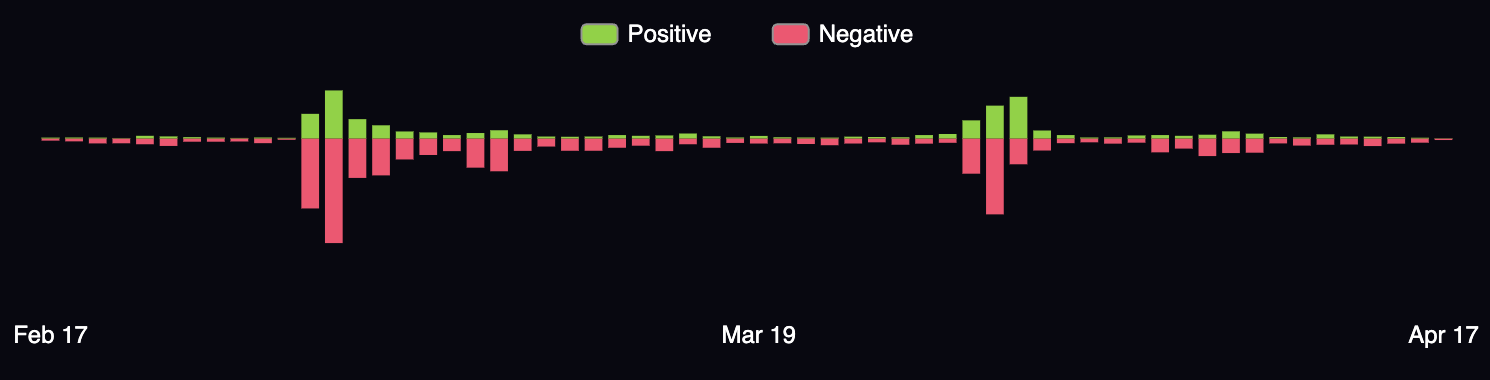
Between November 2025 and April 2026, of the verified unrest and crime events recorded in Miami and the surrounding localities, 66.7% were classified as unrest and 33.3% as crime. Event frequency peaked on December 10 and January 3, periods corresponding with protests related to nationwide ICE raids and the US military operation in Venezuela involving the capture of former President Nicolás Maduro.
Miami is assessed to have a mixed security environment, with crime rates ranging from above to within national averages. More serious violent crimes are typically concentrated in areas less frequented by tourists, often outside downtown locations.
The instability in Cuba significantly impacts Miami's security environment by necessitating heightened police readiness for civil unrest and increasing the risk of maritime security incidents. March 2026 assessments from Miami police indicate that political volatility in Havana is expected to trigger large-scale spontaneous marches and vehicle caravans in areas like Little Havana, Brickell, and downtown Miami.
While the island's economic collapse, marked by nationwide blackouts and severe shortages, creates pressure for mass migration, border restrictions have limited the immediate impact of such a surge. However, direct security risks have manifested in lethal confrontations, such as a February 2026 incident where a Florida-registered vessel engaged in a firefight with Cuban forces. The local security apparatus remains on high alert for domestic disruptions, exemplified by the April 2026 lockdowns of Miami schools following bomb threats.
Instability in Cuba has deepened political polarization within Miami, where the diaspora community is actively preparing for potential regime change.
 Hard Rock Stadium
Venue overview
Seattle
- Lumen Field
- SEA · BFI
- Broadly low, protest-active
| Loading… |
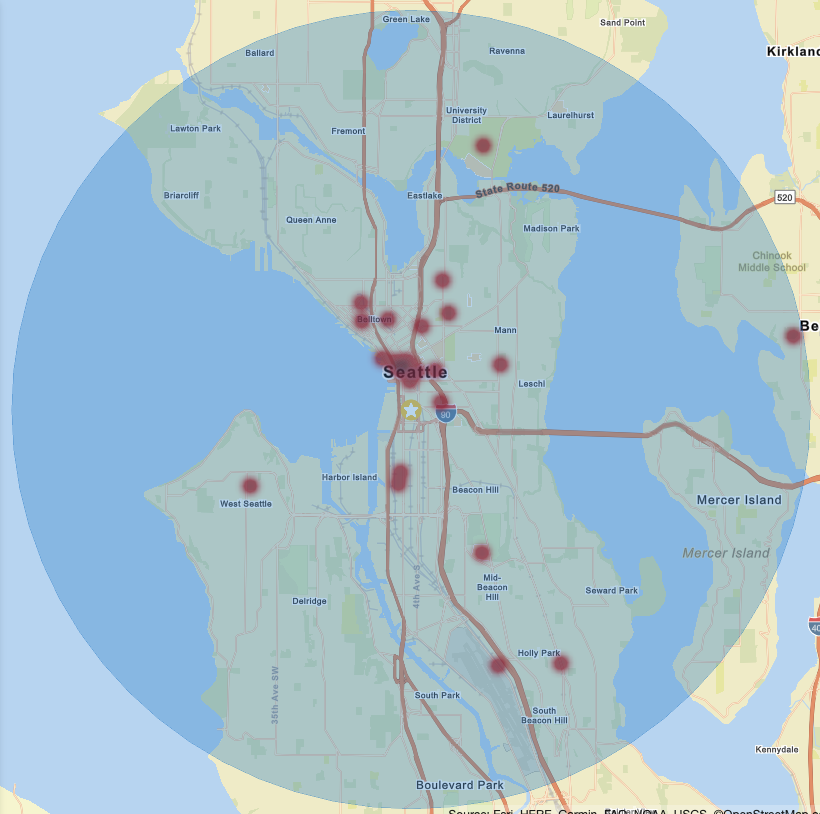
- Apr 7 Protest at Seattle City Hall against Israeli and American military action in Iran; counter-protesters present.
- Feb 19 Activists protested ICE raids and deportation flights at King County International Airport (BFI).
- Dec 18 Striking unionized workers at Starbucks HQ demanded higher wages.
- Mar 1 Iranian nationals gathered at Downtown Park, Bellevue, over the killing of Ayatollah Khamenei.
6 matches at Lumen Field. Active protest culture.
From November 2025 to April 2026, of the verified unrest and crime events recorded in Seattle, approximately 91% were unrest and 9% crime. Within unrest, the majority was protest-related activity. Recorded crime incidents varied between shootings, knife/bladed attacks, and assaults with a blunt weapon.
Seattle is a broadly low-risk destination, but there are areas where caution is advised. Tourist areas are generally considered safe, while violent crime is a concern in specific neighborhoods. The city has an active protest culture, which can lead to transport disruption or unrest.
Crime levels vary by neighborhood. Petty crimes, such as pickpocketing, vehicle break-ins, and bag theft, are common in high-traffic areas like Pike Place Market, the Seattle Center, and the waterfront. Although these spots are well policed, the high number of tourists attracts opportunistic criminals. Travelers should be wary of scams, particularly from street vendors or performers.
Downtown Seattle experienced significant civil unrest in June 2025 as hundreds of protesters marched toward the Henry M. Jackson Federal Building. These anti-ICE demonstrations escalated into violent clashes when protesters launched fireworks and threw rocks at law enforcement. Police responded with dispersal orders and pepper spray. A large dumpster fire was reported and subsequently extinguished.
April 2026 reports highlight ongoing struggles with open-air drug use and homelessness throughout Seattle's streets. King County data from early 2026 suggests a 32% decrease in fatal overdoses over the past two years, though the presence of drug addicts remains a primary concern for the new mayoral administration.
The tournament will place significant pressure on Seattle's urban infrastructure, with six matches scheduled at Lumen Field. The city has undertaken massive waste-clearing efforts, scrubbing 1.2 million pounds of waste in early 2026, but businesses should expect episodic operational disruptions. A partial US government shutdown in place since February 2026 has delayed federal security funding, potentially constraining law enforcement capacity.
While overall crime has improved in certain sectors of downtown as of April 2026, news reporting indicates that homelessness and drug addiction remain highly visible challenges. City advocates and residents have expressed concern over the visibility of these issues, which continue to shape daily life in the downtown area. Furthermore, the city is currently undergoing a targeted retail-crime crackdown to address ongoing theft.
Large-scale demonstrations, such as the 'No Kings' protests in March 2026, continue to cause operational and traffic disruptions, though visitor levels have reportedly returned to pre-pandemic benchmarks. March 2026 assessments indicate that coordinated multi-city protests could affect fan zones and commercial activity during the tournament window.
In depth · Seattle
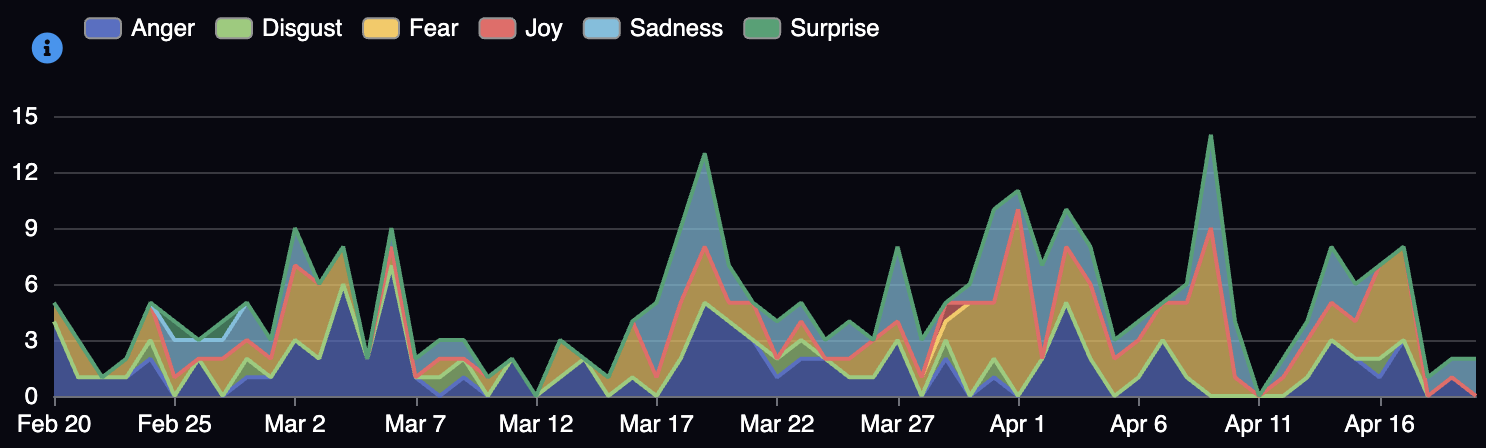
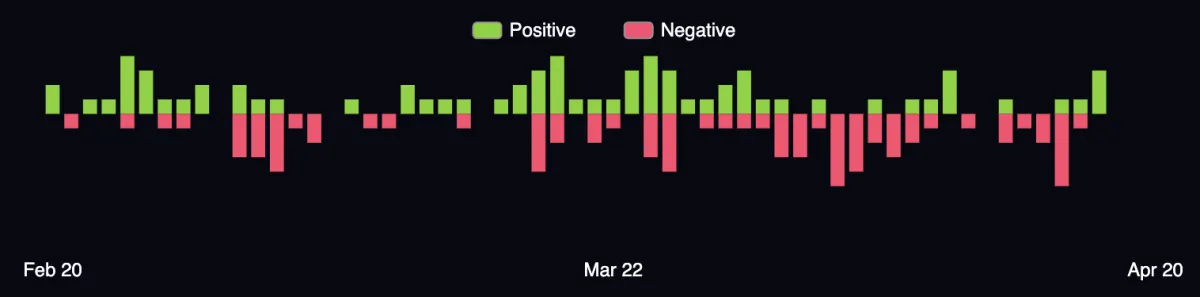
Fear and surprise rising alongside anger.
EmotionsAI analysis of Seattle open-source reporting shows a distinctive multi-emotion pattern compared to other US host cities. While anger remains present, fear and surprise feature prominently, reflecting community anxiety around ICE enforcement, drug-related disorder, and a partial federal government shutdown that has delayed security funding and constrained law enforcement capacity ahead of the tournament.
Venue overview
Atlanta
- Mercedes-Benz Stadium
- ATL
- Generally stable
| Loading… |
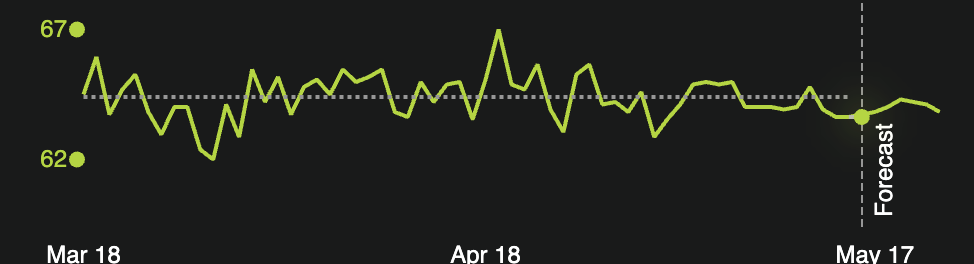
8 matches, including a semifinal.
Atlanta hosts eight 2026 matches at Mercedes-Benz Stadium: a group-stage schedule plus a Round of 32, Round of 16, and the second semifinal on 15 July. Hartsfield-Jackson is the busiest passenger airport in the world; capacity is not the constraint, security throughput in the run-up to knockout matches will be. Residents have formally voiced concerns during April 2026 council hearings regarding the city's preparedness for the 300,000 expected visitors, citing risks to housing and public safety.
While no violent security incidents or large-scale crowd disturbances have been reported at Mercedes-Benz Stadium as of May 20, 2026, the venue has become a focal point for organised political activism. In April 2026, immigrant-rights advocates and community leaders held meetings and demonstrations at Atlanta City Hall to protest potential ICE operations during the tournament, leading to city council resolutions aimed at restricting federal immigration activities. To mitigate broader threats, local law enforcement in neighbouring Cobb County applied for a $10.7 million federal grant in March 2026 to implement counter-drone technology.
Atlanta has experienced a material change in violent-crime trends between 2025 and 2026, marked by a 41% decrease in homicides and substantial drops in rape and robbery, according to March 2026 police data. While cities like Memphis and Washington, DC have reported more drastic reductions in overall violent crime (40% and 29% respectively), Atlanta's progress is tempered by persistent youth violence and a rise in non-lethal assaults involving knives and firearms. The 'homicide capital' conditions of 2022 have abated, but the city continues to grapple with specific categories of violence that diverge from the broader downward national trend.
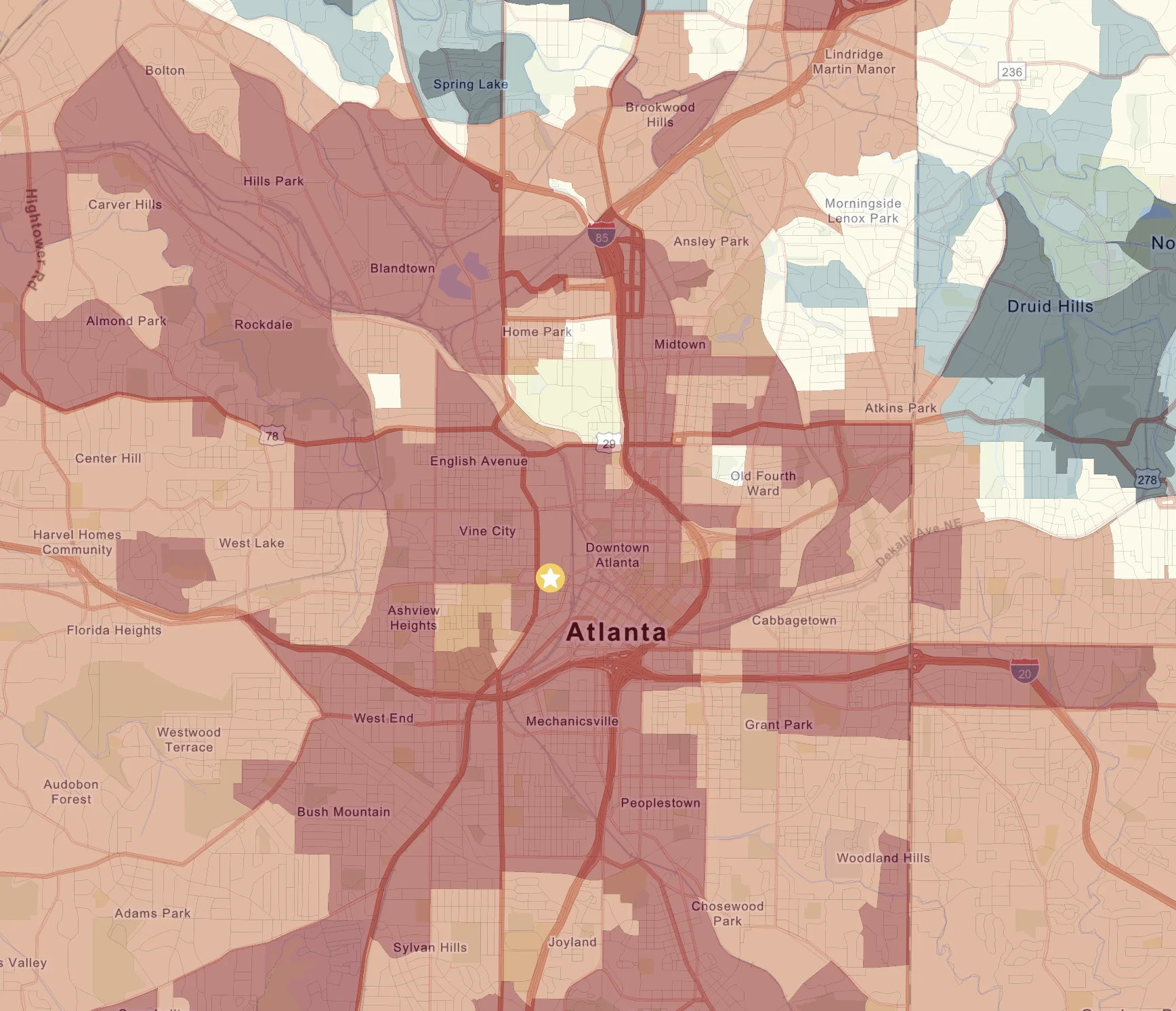
The metro is assessed as a generally low security risk for visitors, though aggregate crime rates in the City of Atlanta sit above state and national averages. As in most major US host cities, more serious violent crime concentrates in neighbourhoods that tourists rarely transit; downtown around the venue is well-patrolled.
Protest activity in Atlanta has been recurring rather than episodic: anti-ICE demonstrations through 2025-2026, periodic actions tied to the broader 'No Kings' movement, and ongoing organising around the city's public-safety training centre. Expect demonstrations within walking distance of the stadium on match days, particularly around the federal building and Centennial Olympic Park.
 Mercedes-Benz Stadium
Centennial Olympic Park
Mercedes-Benz Stadium
Centennial Olympic Park
Venue overview
Philadelphia
- Lincoln Financial Field
- PHL
- Elevated · July 4 convergence
| Loading… |
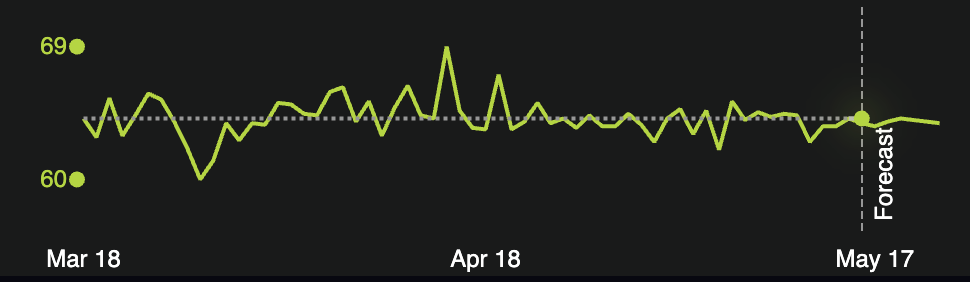
July 4 match overlaps America’s 250th anniversary.
Foreign visitors attending World Cup matches in Philadelphia should expect a high-security environment characterized by significant operational friction and elevated threat levels. As of May 2026, the Department of Homeland Security warns of an extremely high threat level, particularly for soft targets like hotels, fan zones, and transit hubs outside the main stadium.
A critical security peak will occur on July 4, 2026, when a match at Lincoln Financial Field overlaps with America’s 250th anniversary, creating unprecedented strain on transportation and public safety systems. The convergence is expected to result in one of the largest security operations in the city’s history, complicating fan movements and emergency response capacity.
While tailgating is not officially banned, April 2026 reports indicate that extensive security perimeters and controlled access zones will make the practice nearly impossible, forcing fans into highly regulated movement patterns. Additionally, March 2026 assessments warn that visitors may encounter coordinated protests targeting the event to highlight political grievances, which could disrupt access to venues and fan areas.
Crime rates in the City of Philadelphia sit above state and national averages, though the distribution is heavily neighbourhood-dependent. Center City, where most visitors will base, reports lower violent-crime rates than the city aggregate, and the area surrounding the Sports Complex is heavily policed during events at the four-stadium campus.
Travelers are advised to expect complex transportation routes, intrusive security screenings, and potential rights-related concerns regarding data privacy and border enforcement. The tournament will place immense pressure on Philadelphia’s infrastructure, with May 2026 reports noting simultaneous strain on transportation systems, public safety communications, and healthcare networks.
Venue overview
Kansas City
- GEHA Field at Arrowhead Stadium
- MCI
- Stable · soft-target risk
| Loading… |
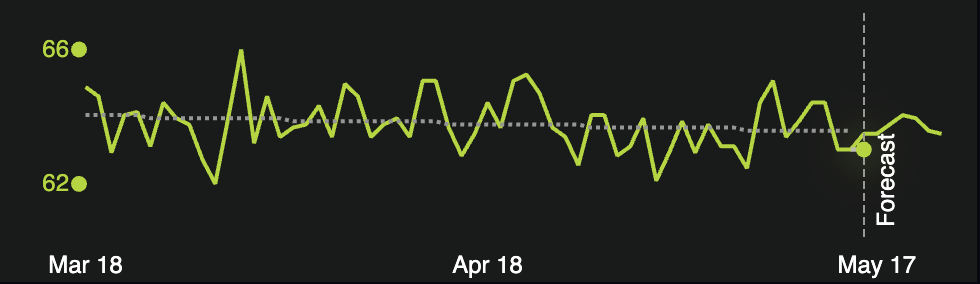
Heavily secured venue; soft targets carry the highest exposure.
International travelers visiting Kansas City for the FIFA World Cup 2026 will operate in a highly scrutinized security environment characterized by extensive inter-agency coordination and proactive threat mitigation. May 2026 assessments indicate an elevated national terrorism threat level driven by US-Iran tensions and domestic extremism, with experts warning that the tournament is a ‘tempting target’ for radicalized individuals.
While match venues will be heavily secured, most visitors face their highest exposure to risk at ‘soft targets’ such as hotels, public transit, and fan zones. Local law enforcement, including the KCKPD and Overland Park Police, conducted specialized training in March and April 2026 to manage disturbances and active threats on public transportation.
Travelers should anticipate localized operational disruptions, including precautionary evacuations or security sweeps at Kansas City International Airport (MCI) and major public sites, as authorities maintain a low threshold for responding to suspicious items or unverified threats. Integrated federal support from CISA is also active in the region, focusing on counter-IED preparedness and explosive blast modeling for fan-fest areas to protect the high volume of expected visitors.
Crime in the Kansas City metro is below the typical baseline of the larger US host cities, though violent-crime rates in specific neighbourhoods of KCMO proper run above national averages. The downtown corridor and Country Club Plaza, likely visitor footprints, are well-policed. Protest activity has been intermittent rather than sustained; the 2024 Super Bowl victory-parade shooting remains a live reference point for local public-safety planners.
Future events to monitor
What Seerist is watching during the tournament window.
Future events cover one-off or recurring incidents that could cause operational disruption, heightened security threats, or significant political decisions. On Seerist’s country page, calendar events carry a severity rating and impact-type tags like unrest and transportation.
Sample events · snapshot from May 2026
Low
'Crush ICE' rally in Honolulu, HI
Demonstration at Atkinson Drive and Ala Moana Boulevard to denounce ICE raids and detention centres. Traffic disruptions and increased police presence likely; past anti-ICE actions nationwide have produced clashes with police.
Low
'Rally for Voting Rights' in Ann Arbor, MI
Demonstration at Washtenaw Avenue and Huron Parkway to rally for democracy and denounce the Supreme Court's gutting of the Voting Rights Act. Traffic disruptions possible near the site.
Low
'Defending Democracy' protest in Kingwood, TX
Demonstrators gather at Kingwood Drive and Green Oak Drive to protest the Trump administration and the 'destruction' of democracy. Traffic disruptions and increased police presence possible near the site.
Medium
Atlantic hurricane season
Heightened natural-disaster risk for powerful storms that can cause significant damage along the Atlantic, the Caribbean, and the Gulf. Expect evacuation orders, power outages, and airport / road closures across affected coastal and inland areas.
Low
USMCA joint review
Joint review will determine whether the US–Mexico–Canada Agreement is extended 16 years or renegotiated. Rules of origin, the automotive sector, critical minerals, labour enforcement, and trade with China dominate the agenda.
- Low severity
- Minor or isolated operational disruption. No precedent for violence; current conditions don't suggest violence is likely.
- Medium severity
- Moderate or localised disruption. Some precedent for isolated violence and a realistic possibility of limited security incidents.
Flashpoint insights
Multiple grievances converging on the tournament window.
The United States faces a high-risk environment for civil unrest and operational disruption during the June–July 2026 FIFA World Cup, driven by a convergence of domestic and geopolitical grievances. Analysts warned in March 2026 that the tournament will likely serve as a stage for massive protests against the Trump administration’s immigration policies, particularly following the January 2026 fatal ICE shooting in Minneapolis and the subsequent deployment of additional agents.
Labor instability is a direct threat: Los Angeles stadium workers have threatened to strike over the presence of ICE at venues. Geopolitical tensions related to the conflict with Iran and FIFA’s involvement in Gaza reconstruction are expected to drive anti-war demonstrations and potential lone-wolf extremism near stadiums and fan zones.
Activists are increasingly adopting creative direct-action tactics, including sabotage and vandalism, in response to the criminalization of traditional protest. Analysts assessed in May 2026 that critical logistics and infrastructure (roads, rail links) remain key targets for groups motivated by environmental, anti-war, and anti-capitalist causes. While most protests are expected to be peaceful, smaller operating bodies may target sponsors and private-sector organisations to influence business partnerships.
How this is built
Every figure in this report is sourced from a Seerist capability.
Heatmaps, verified-event counts, PulseAI stability scores, EmotionsAI breakdowns, and analyst briefs all flow through a single platform. Below is what powers them.
-
AskAnna
Fully sourced intelligence Q&A outputs that eliminate searching and deliver clarity on demand.
-
DiscoverAI
Surface the most-reported security, political, and geopolitical stories over a given time range.
-
PulseAI
Identifies micro and macro indicators of change in real time.
-
HotspotsAI
Tracks patterns of activity, flagging anomalous events.
-
ScribeAI
Turn Hotspots, Events, and Pulse into real-time reports.
-
Forecast
7-day Pulse stability forecasting.
-
EventsAI
Filter conflict, crime, disaster, health, terrorism, transportation, travel, and unrest.
-
Verified Events
Incidents collected, verified, and geocoded by a team of expert researchers.
-
Risk Ratings
Evaluate and compare countries across security, operational, and political ratings.
-
Country Profiles
Contextual information about security, political, and operating conditions.
-
Monitor
A customisable dashboard of Seerist's unique data feeds, tailored to security watchlist needs.
-
Mobile + Alerts
Step away from your office without fear of missing a crucial event. Customised alerts for every feature.
-
Assets Dashboard
A single place to view your organization's locations, current risk profiles, verified events, and more.
-
Alerts
Enable customized alerts for every feature of Seerist, delivered the moment conditions change.
-
Analysis
Identify key events and emerging trends curated by hundreds of global analysts.
Continue the briefing