

Blog · 2026.08.06 · 1928 UTC
The Best Intelligence Technology Is Built Around How Analysts Actually Work
John Goolgasian, President, Global Government, Seerist
There is a version of technology built to impress in a demo. Clean interface, fast alerts, impressive data volumes. It looks right. It sounds right.
And then analysts actually use it.
The workflows don't match. The data is disconnected. The alerts fire constantly but explain nothing. The platform was built around what technology can do — not around what intelligence teams need to do.
That gap is not a minor inconvenience. It costs time, degrades analysis, and in high-stakes environments, it costs decision advantage.
Building technology that closes that gap requires something harder than engineering. It requires a genuine understanding of how intelligence professionals work — how they search, how they assess, how they move from signal to understanding to action. It requires years of listening to customers, watching workflows, and being honest about where the friction lives.
That is the foundation of the next generation of Seerist.
The Problem with Most Intelligence Platforms
The modern analyst does not have a shortage of data. They have a shortage of time.
Too much of that time is spent on tasks that technology should be handling: searching across disconnected sources, reconciling conflicting reports, filtering noise to find the signal that actually matters. By the time an analyst has assembled the picture, the window for decision advantage has often narrowed.
Most platforms were built to solve the data access problem. Seerist's next generation was built to solve the intelligence workflow problem.
Finding Intelligence Faster
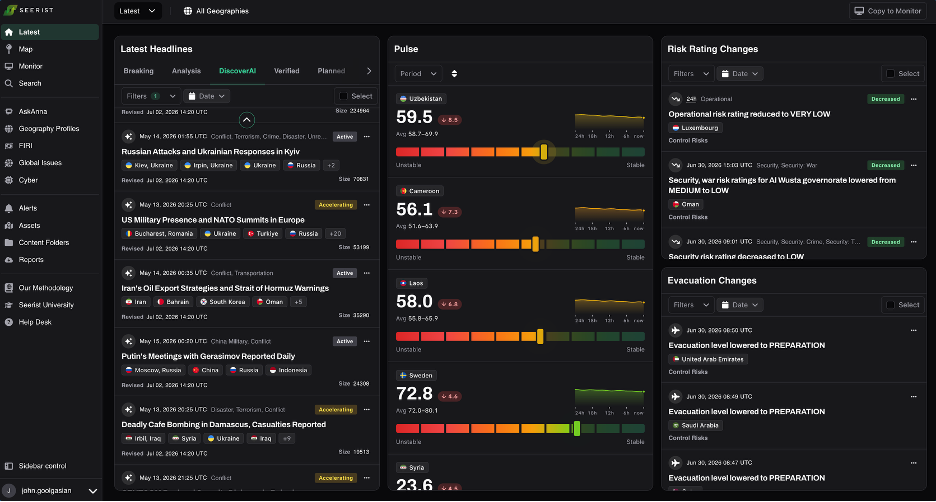
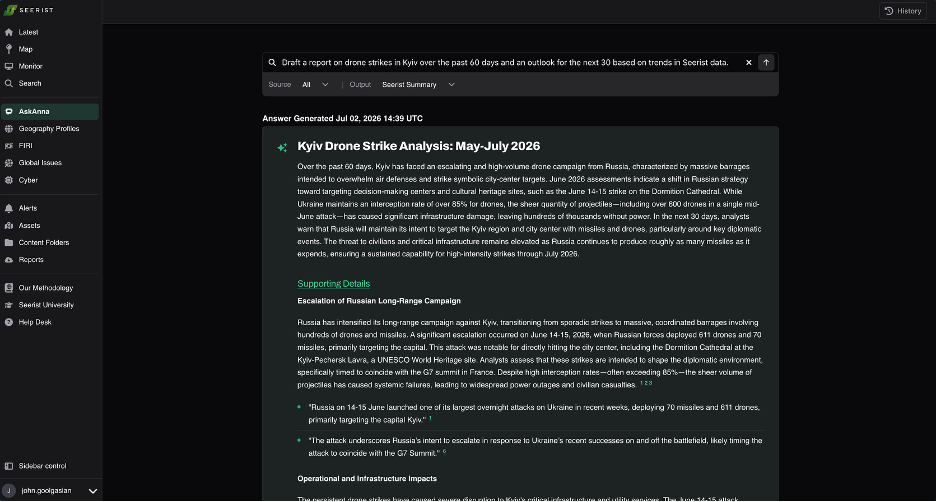
The first pillar of the new platform is unified data — an intuitive search experience that spans strategic analysis, tactical developments, AI-enabled event detection, human-verified alerts, and dynamic analytics in a single interface.
This morning, working remotely, I pulled up the latest developments on drone attacks against Ukrainian infrastructure. Natural language input. Unified results. No switching between modules, no stitching together separate feeds.
The right intelligence, surfaced faster, in a single workflow.
For analysts operating under time pressure — which is to say, all analysts — that is not a convenience. It is a force multiplier.
Turning Signals Into Understanding
Finding information and understanding it are two different problems.
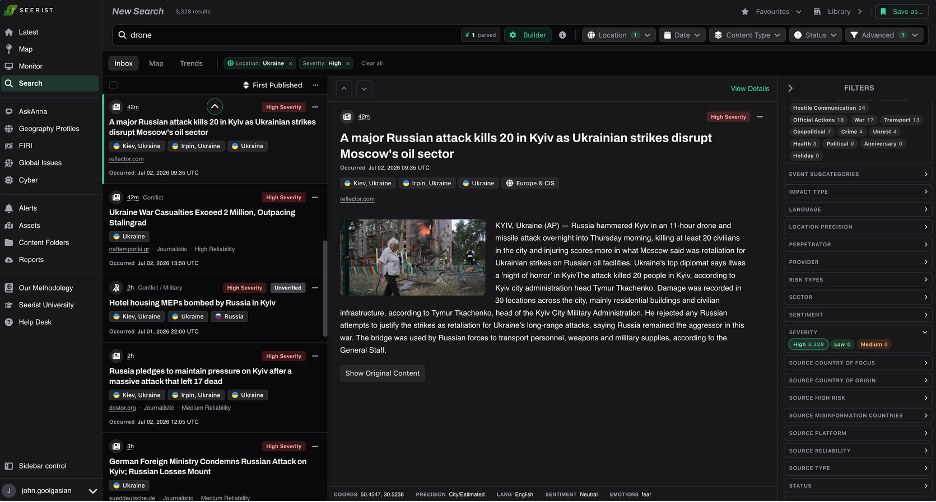
The second pillar addresses exactly that: connected signals. Disparate inputs — news, social media, analyst reporting, AI-detected events — are consolidated into contextualized intelligence automatically. The platform standardizes navigation, filters, dashboards, and intelligence feeds across the entire experience, reducing friction and creating a consistent picture regardless of where in the platform you are working.
This is where AI and human teaming does its most important work. The machine clusters, connects, and surfaces. The analyst assesses, validates, and determines what it means for the mission. 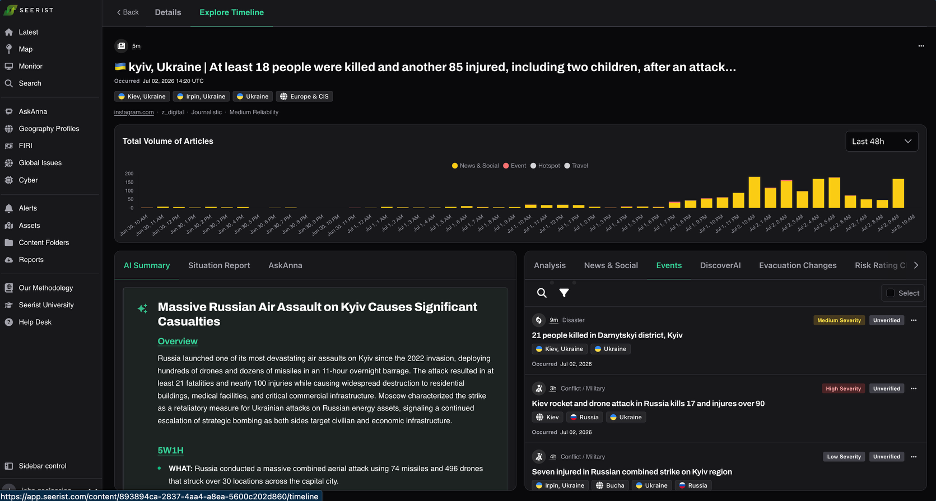
Intelligence Organized Around the Mission
No two teams use intelligence the same way. A fusion center monitoring special events has different requirements than a defense team tracking force protection risk. A corporate security team managing travel risk operates differently than a government analyst supporting national security decisions.
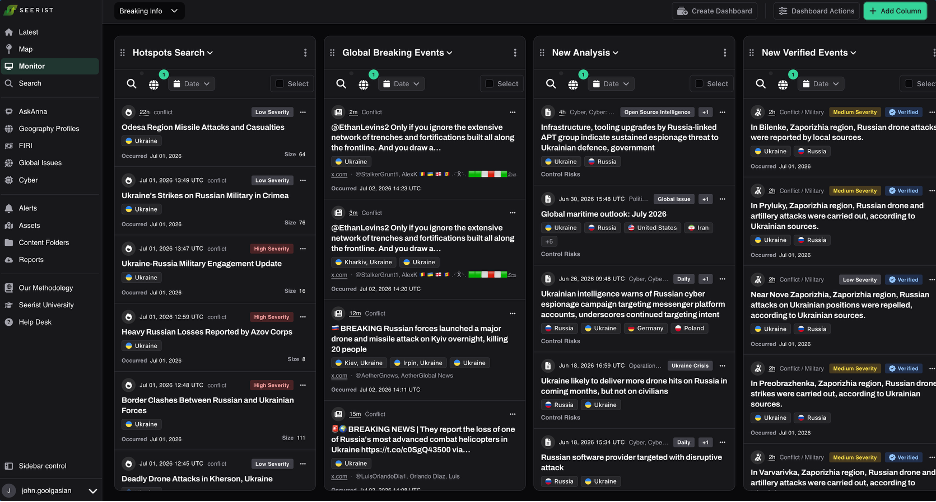
The third pillar — greater customization — gives teams real control over how intelligence is organized and consumed. Role-specific dashboards. Saved searches. Configurable alerts. Asset management built around what each team is actually protecting and monitoring.
The platform adapts to the mission. Not the other way around.
Connecting Tactical and Strategic
The fourth pillar is the one that most directly addresses the gap between data and decision advantage: integrated intelligence.
Tactical developments and strategic analysis have historically lived in different places, requiring analysts to manually connect what is happening on the ground with the broader context that explains why it matters. The new Seerist brings those layers together — enhanced location overviews, powered by Seerist's content and analysis from our partnership with Control Risks, that combine real-time events, historical risk trends, and expert analysis in a unified intelligence report.
The result is a more complete understanding of the issues that will impact our World. Faster context. More defensible decisions.
Built for What Comes Next
Much of what makes this release significant is not immediately visible. The new platform is built on an AI-native foundation designed not just for today's workflows, but for the agentic capabilities and deeper operational integrations that define where intelligence technology is headed.
This is the infrastructure for the future of risk intelligence — built deliberately, with the understanding that getting the foundation right determines what is possible next.
The Standard That Matters
Technology built to impress in a demo and technology built to perform in operations are not always the same thing. The best intelligence platforms are built around how analysts actually work with content and methodology they can trust — how they search under pressure, how they move from signal to assessment, how they deliver insight to decision-makers who have no time to waste.
That is the standard Seerist is building toward: creating the most useful platform for the people responsible for keeping organizations, missions, and people safe. Explore the next generation of Seerist and see how it's transforming intelligence workflows from signal to decision.
Recent Posts
-
Redefining Pre-Travel Risk Assessments: From Manual Checklists to Continuous Intelligence
Discover how continuous, curated intelligence helps security teams deliver more accurate travel risk assessments and better protect employees before and during travel.
-
Global Outlook July 2026
We have identified the following key developments and trends in July to watch globally over the coming month.
-
How We Rebuilt Seerist for What's Next
A look inside Seerist's next-generation platform transformation—how customer feedback, lessons learned, and a complete architectural redesign are shaping the future of AI-powered risk intelligence.