

Blog · 2026.06.30 · 1313 UTC
How We Rebuilt Seerist for What's Next
A look inside Seerist's next-generation platform transformation—how customer feedback, lessons learned, and a complete architectural redesign are shaping the future of AI-powered risk intelligence.
Tim Roots, Chief Product Officer, Seerist
It’s been close to four years since we created Seerist – blending the real-time capabilities of Geospark Analytics with the deep analytic bench that existed within the Control Risks CORE product. This was a concept many years in the making, based on the principle of blending analysts with machine capabilities to drive real contextualization of the past, present and future operating environments for both public and private clients.
What began as a thesis and a business case turned out to be far more complex and demanding than many of us anticipated. We tested assumptions, refined our understanding of what the market truly needed, and learned a few difficult lessons along the way.
In hindsight, we came to market quickly with a solution that was still maturing in a domain that is appropriately cautious and risk averse. We had strong ideas and clear proofs of concept embedded in the models and capabilities we deployed, but in the early days we had not yet achieved the consistency, reliability, and “say-do” discipline our clients needed from us. At times, we also looked inward for answers when we should have been working more closely with the clients who trusted us from the beginning. Those hard lessons shaped us, strengthened the company, and ultimately helped build the foundation for what Seerist has become.
The last year and a half in particular has been amazing as we’ve moved from migration to innovation. Our company has grown, we’ve launched some cool features, and the business and product have never been healthier. But as we look to the future to what our clients are now trying to achieve, alongside the vast leaps that numerous aspects of the technology landscape enable all of us to make, we’ve decided to take another jump into the deep-end and shift things up dramatically within the product.
The Next Generation of Seerist
With any reimaging of a product, there is always risk. We’ve trained tens of thousands of users to utilize the platform as it is today. We’ve built this into critical workflows across numerous client use-cases, and our old data model feeds a variety of mission critical solutions. Which brings me back to the Voice of the Customer and how we’ve used that to validate and inform our progress.
Thankfully, I have the privilege of leading a team full of practitioners and past users. My team is grounded in practical experience – something that shouldn’t be unique in our industry but often is. Analysts and Operators building for Analysts and Operators. As part of our rebuilding, we accelerated the voice of the customer activities. The past few quarters, we’ve averaged 240 client meetings a quarter (20 unique ones a week), and we’re on track to hit 1000 for the calendar year. This is a huge sample size of feedback to work with and, when put alongside our relationship with Control Risks and their expertise, the voice and influence of the market is well and truly embedded into every aspect of our build. The best ideas consistently come from our clients – and the drivers behind our next generation release are embedded in their voice and feedback over the past few years.
So, What is in this Next Release?
Well, we’ve left no stone unturned.
Unified Data Model: This has been the hardest part, but we’ve rebuilt the whole data model underpinning Seerist. Some of this is unification: simplifying how our analyst-produced data connects with our news and social media feeds. Some of it is contextual: reshaping the best data for the specific use-case at hand. Some focused-on simplification: consolidating and de-duplicating our taxonomy.
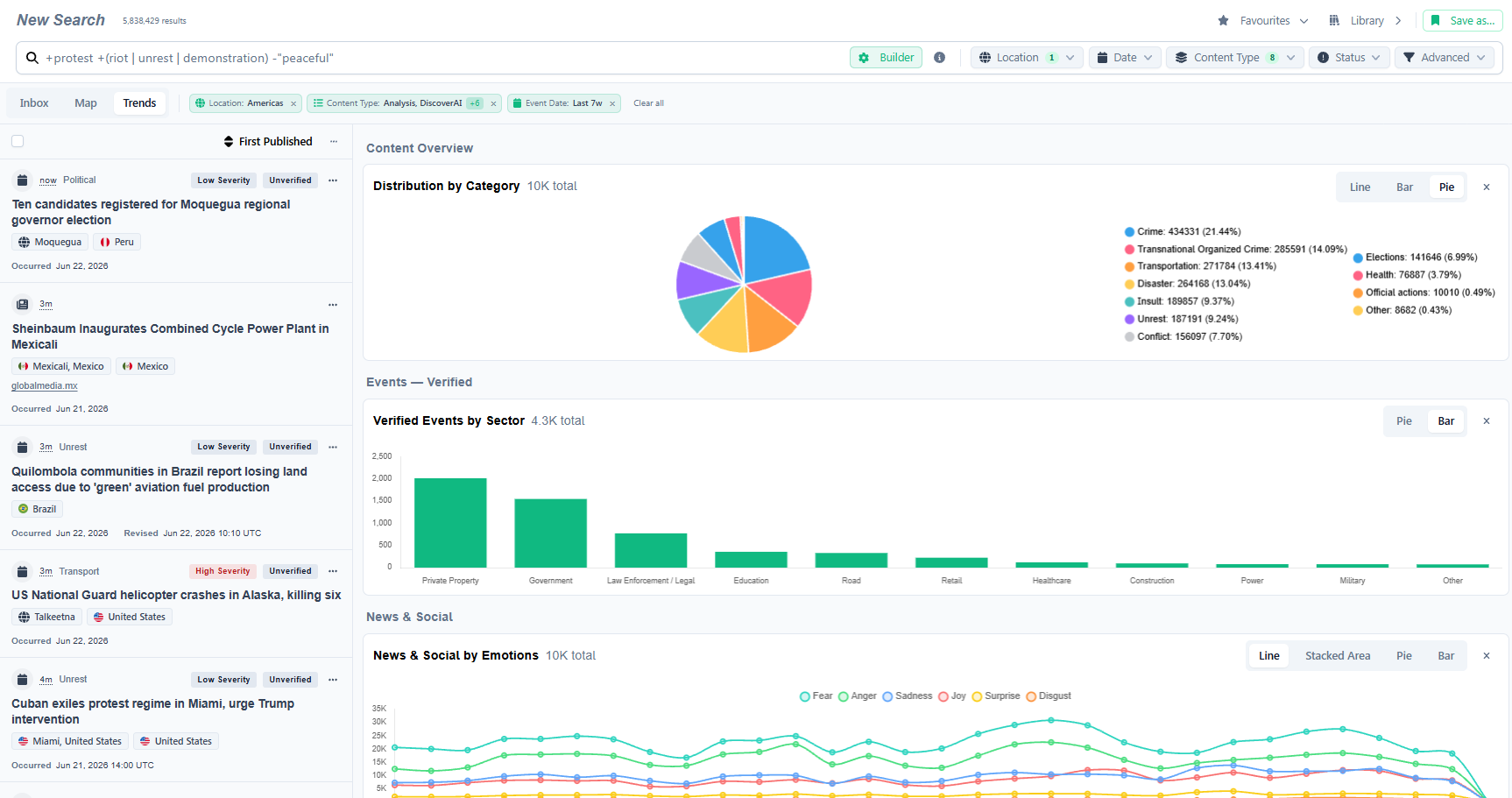
Updated API Infrastructure: With our data model comes the shift to our API and data infrastructure. We’ve always been ‘API first’ in how we built but now this principle is with user experience in mind. We’ve simplified how our APIs work, reshaped our documentation to better enable ‘builders’ and deployment of our MCP and CLI options. Our strategy has never been about what is only ‘on’ Seerist – our clients are doing amazing things, and we need our data to be accessible and adjustable for the frontier of our client asks.
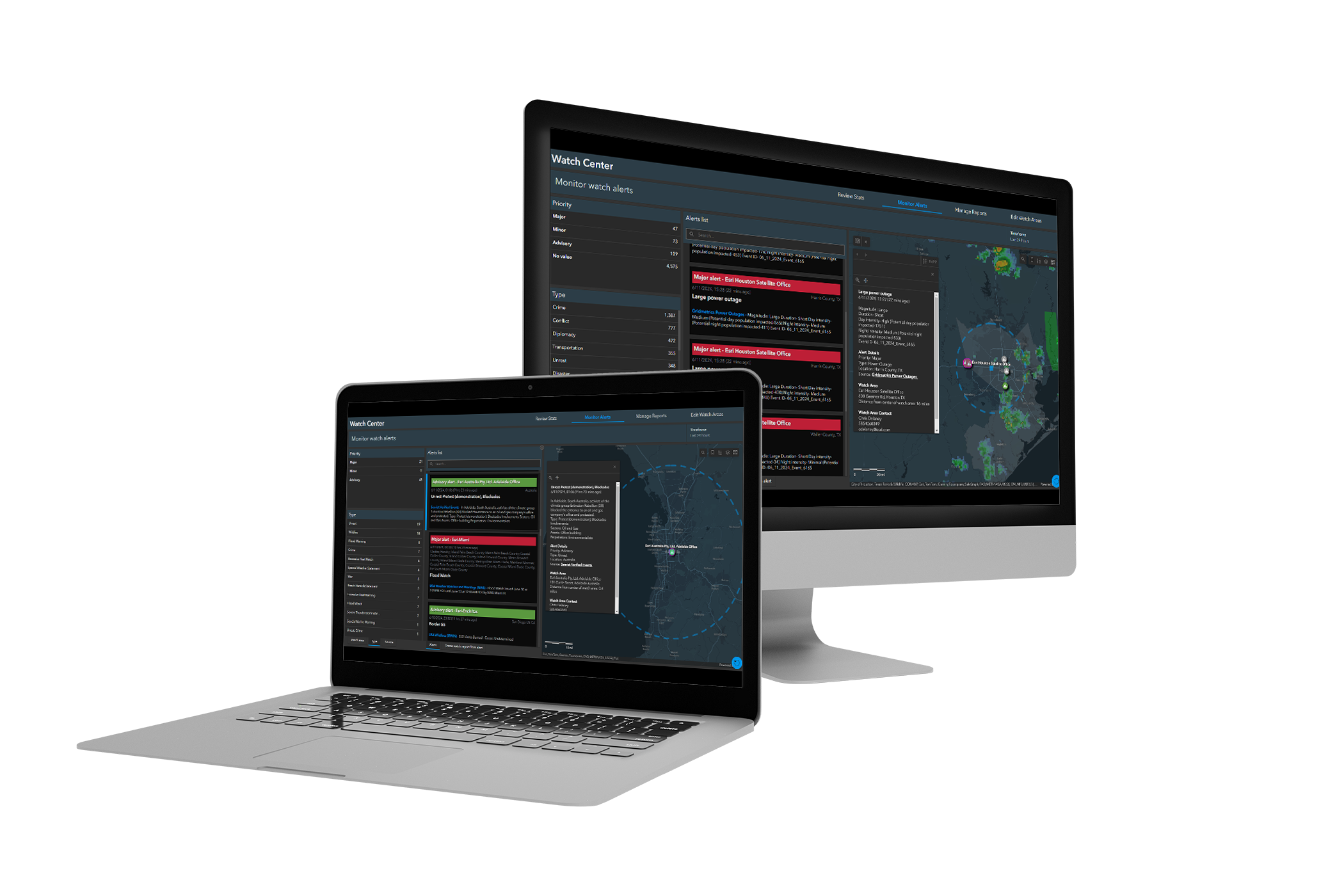
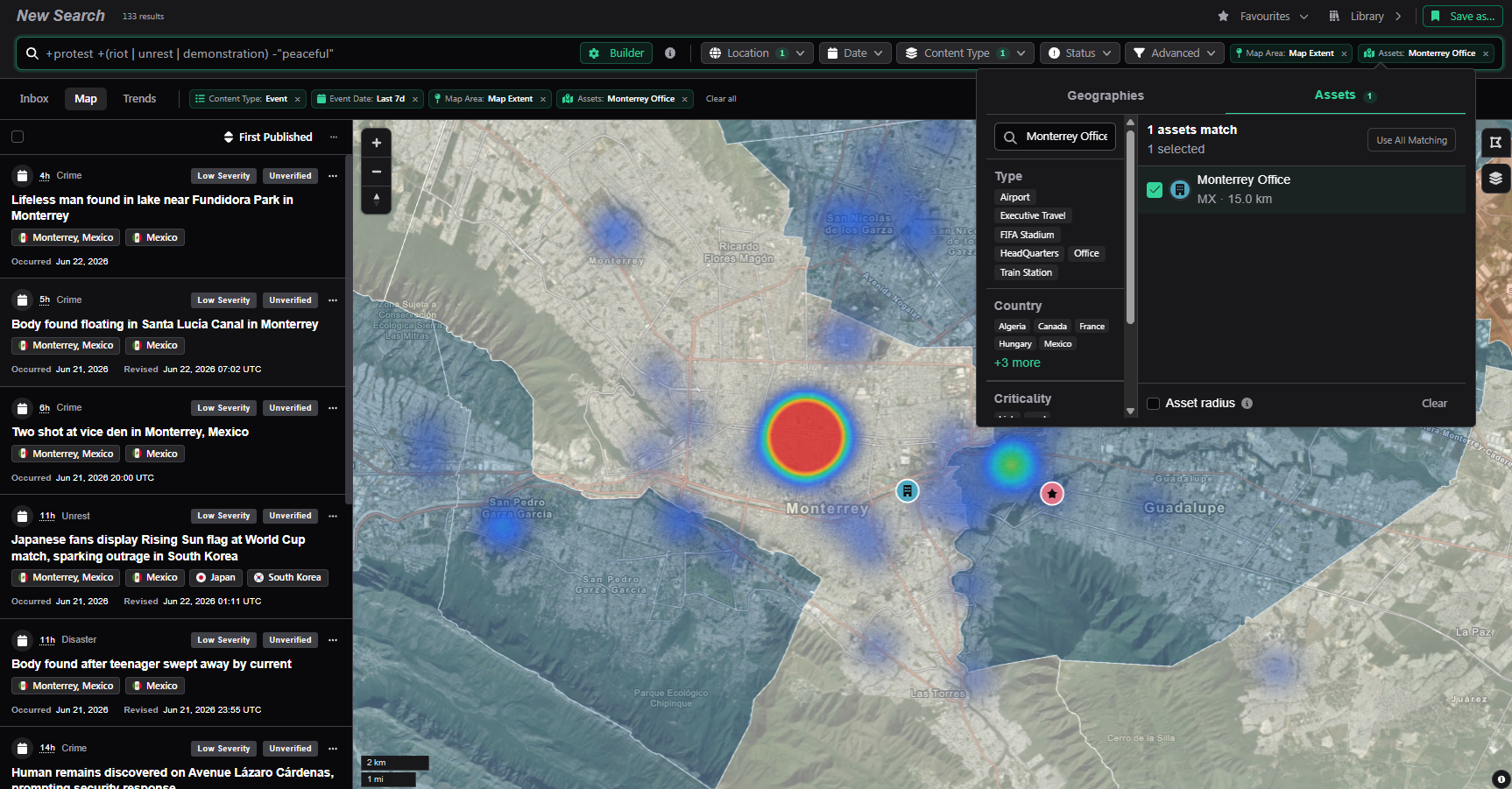
Deeper Workflows: Shifting away from lots of dashboards to driving more jobs within Seerist. Some of this is about greater alignment to how our customers think. An asset is no longer just a dot with a geofence; it’s now a customizable object where criticality, vulnerabilities, and wider aspects of a client’s threat matrix can be implanted and accelerate how you build core intelligence products, ranging end-to-end from exposure assessments to impact assessments) Through a soon-to-be-released ability, you’ll be able to no-code your own workflows across Seerist for management of incidents, interests, assessments and reporting.
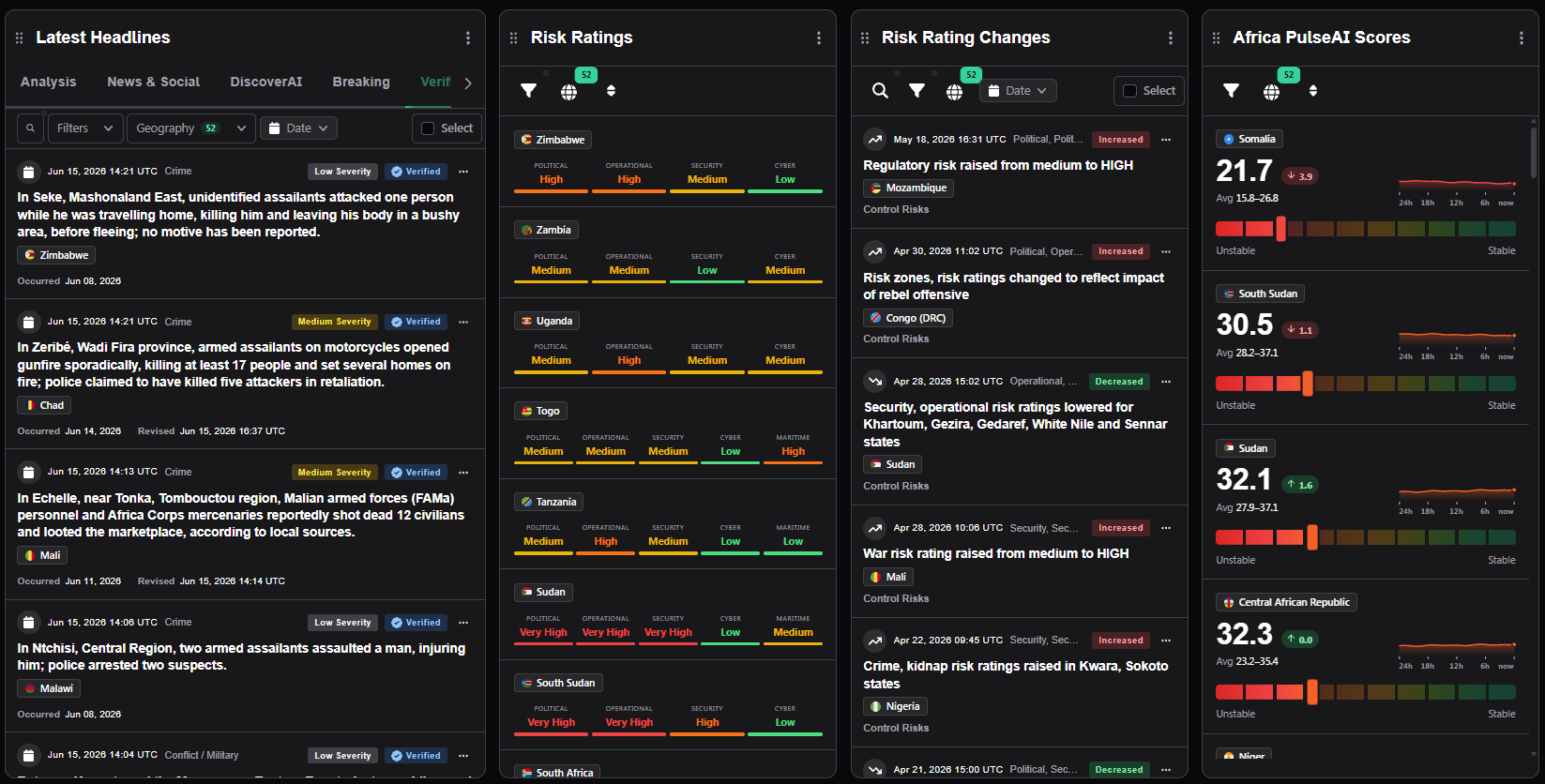
Overhauled User Experience: We didn’t just shift our architecture here. We redesigned everything from the ground up. We unified all our workflows, built customization into every aspect of the platform, and have worked ‘speed to wow’ principles into all of our platform touchpoints and interactions. In a market full of data feeds and analysis of library products with maps tagged on, we’ve gone full enterprise in building the workbench for analysts and operators. Any point of our data can be combined, aligned with your footprint or supply chain and then built into custom dashboards for alignment with your operating model.
This project started as something relatively small and grew into much more than we initially anticipated. Scopes crept, opinions shifted, and a fair few debates have ensued. Stress has been high, and our capacity to take on everything has been stretched. We ended up in a place we couldn’t have got to had we not taken some risks, and we’re excited to finally show you what we’ve been working on.
Where Do We Go Next?
We’re already hard at work on our next release. These are grounded against four major pillars shaping our thinking:
Everyone is now a builder: The barriers to entry for creating real applications, workflows, models, and agents are gone. We’re already seeing this with the increased and accelerated use of platform adoption via our APIs. As a result, we made the call to open up access to our innovation and data science environment to our customers. This is a super clean two-way benefit – our clients get their hands on the frontier and implementable ideas we have cooking and at the same time, we get live feedback and inputs into where we’re playing our bets. No more theoretical PowerPoint roadmaps, we’re innovating in real-time with our customers.
Our clients are changing, so our data does as well: The tools our customers are getting are leaping several generations. For clients that barely had the ability to work through an API discussion, they are now engaging with MCPs, CLIs and building their own agents to interact with our data. This is massively exciting and empowering for our users and their internal customers. The problems we solve are existential in implication for our customers and being able to be part of their toolkits in new and exciting ways is brilliant. And back to the earlier point on chains of control around data, the importance of the veracity and integrity of our data and analysis is key
Tradecraft is the moat: So, if everything is easier to build, how do you sustain a business? Back to the start, tradecraft is central to how we think here at Seerist. This only ramps up in importance. The approach we’ve taken at Seerist to pair tradecraft with research scientists, top tier engineers and philosophic thinkers – if you’re going to think differently, you need to do things differently. We still deeply believe we’ve got ways to solve some of the key jobs our users are trying to solve for, and this uniqueness enables everyone to benefit from, at scale.
Partnerships: The market is flush with innovation, both within our partners at Control Risks, Bloomberg and several others (soon to be announced). We at Seerist do not believe we have to build everything – but the integrity of our ratings, data, analysis and models have a reputation that is seeing it enter into a range of platforms and applications.
At the heard of the above, we’re deeply obsessed with bringing together the analyst/operator axis, helping analysts have more operational tools and operators to accelerate their ability to perform analysis. We believe the market has overly indexed on overselling workflows that are more focused on speed of data and not solving the blockers that sit behind making defensible decisions. We’re stepping into this ‘analytical burden’ and our roadmap is solely focused on supporting the deeper management of decisions within the security and intelligence enterprise.
We’re excited to show you where we’ve got to and where we’re going. We also couldn’t do this without our spectacular engineering and data science team. This is a group of high agency individuals who challenge every idea, bring their own to the table and bring a degree of innovation, applied research and problem obsession that most organisation’s can only dream of. The leadership that Matt McKnight, our CTO, brings is second to none and he’s doing it from the front, with detail in mind. Hats off.
Got an idea, reach out to me directly on tim.roots@seerist.com
Recent Posts
-
The Best Intelligence Technology Is Built Around How Analysts Actually Work
-
Redefining Pre-Travel Risk Assessments: From Manual Checklists to Continuous Intelligence
Discover how continuous, curated intelligence helps security teams deliver more accurate travel risk assessments and better protect employees before and during travel.
-
Global Outlook July 2026
We have identified the following key developments and trends in July to watch globally over the coming month.